In brief
Talk To Rex is James Aylett and James Lark. We make films, write books, and talk about Dr Who a lot. If you want, please get in touch with us.
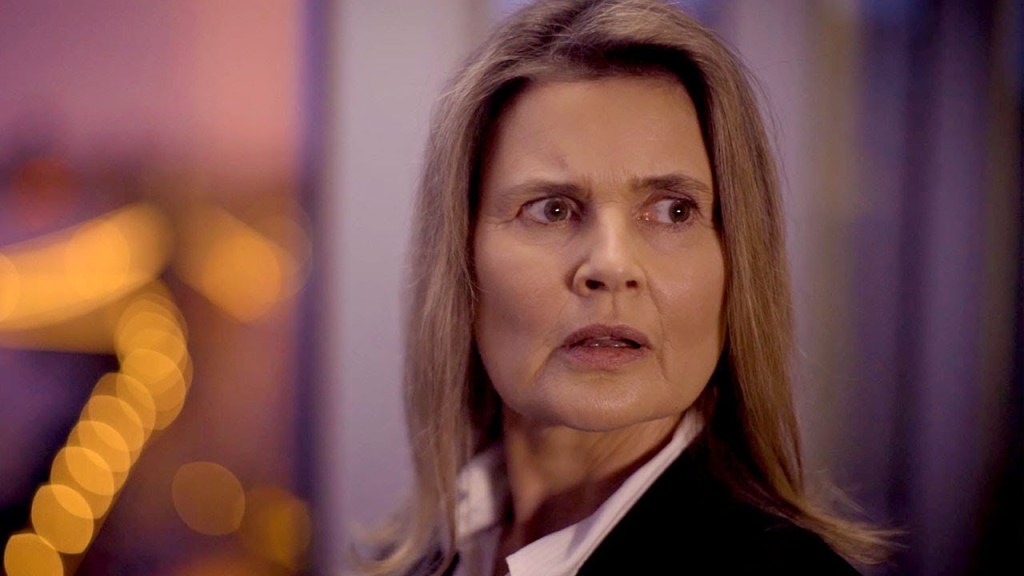
The concierge also has some nasty suspicions about what the camera's for...

So, shall we analyse what's going on in this advert? Oh, do let's.
The thing that strikes me is that, although lastminute.com promise 'concierges that read your mind', this fellow's mind doesn't really take a lot of reading. It may be the kind of thing that certain people book late deals for, but it seems a rather inappropriate thing on which to base an advertising campaign.
If the concierge's face is anything to go by, he's none too happy to have read this particular mind, though the reluctance in his expression suggests that he is well aware that simply reading a customer's mind is not all that's required of him. No doubt he'll be handsomely tipped, but one feels that he's already hunting around for other hotels to work in.
Indeed, the particular stances adopted by both characters in this horrific vignette indicate that, having read the customer's mind, said concierge has already at least hinted that he is well aware of what the customer wants from him, and said customer is really quite chuffed at the thought of what is to follow. And the concierge is inwardly sighing because he was rather hoping he'd misread this customer's mind all along.
A second letter to the DVLA, who ignored the first.
Hi.
Eight months ago I moved house and, as I needed to change my address with the DVLA, I went with the 'do it online' option, following the process through right up until the point where it left me back at square one, forcing me to do make the request on paper in the traditional method. I put a rather petulant note in with my address change request, pointing out that your system had let me down and cost me time I could ill afford to lose. Petulant it my have been, but excusably so I think, given the stress that moving house causes, added to in no small part by the shortcomings of your system.
As luck would have it, I find myself to be in the position of moving house yet again, but in spite of the short period of time which had elapsed since the last move, I had forgotten quite how bad your online system was, and like a mouse leaping towards a piece of cheese which has already broken its tiny spinal cord, I once again sat down to 'do it online'.
Since my petulant note was roundly ignored eight months ago, I am sending this polite email to a) inform you that the problems remain and to relate them to you as specifically as I can and b) request that some kind of action is taken to make sure that, when I next move house, I will not be subjected to the same risk to my blood pressure. (Some kind of apology, or failing that even an acknowledgement that I have bothered to write to you, might be nice as well.)
1. To change my address online I am required to log on with my Government Gateway details. In spite of the fact that I file a tax return on an annual basis using the same username and password, these seem not to be recognised by the system which tells me I must 'register first'.
2. There follows a laborious process of registration, including the past three years' worth of addresses, after which your website tells me 'you have already registered!'. The cheery exclamation mark implies that I am somehow ridiculous for having gone through this silly process, even though I wasn't given the option to do otherwise and was perfectly well aware that I had already registered. Never mind, I think; what's done is done, and I'm surely nearing the end now.
3. I am indeed nearing the end. A couple more pieces of information and the next page informs me, without giving any reason at all, that the system is not able to acknowledge my change of address and 'none of the information you have entered has been saved'.
The levels and number of ways in which this system has failed me are, I think, perfectly obvious, perhaps the most annoying being that it gives me no reasons for what has happened and no option other than to start again (a trap which I fell into eight months ago, there being nothing to suggest that it was necessarily the system, as opposed to my information, which was fundamentally flawed).
For pity's sake, if you can't fix your online system at least put up a warning in big letter that it is quicker (and it is, I think probably even for those lucky people who get through the entire assault course, still quicker) to fill in the green counterpart on the paper part of the licence and post it?
Yours sincerely,
James Lark
P.S. If your 'contact us' page has a ten minute timeout, it is also polite to inform people of that fact before, rather than after, they have pressed 'next'. Don't worry though - I know your website well enough by now to have anticipated such inconsiderate technical shortcomings and made sure my missive was saved and preserved in all manner of formats before taking the plunge.
P.P.S. Oh my bloody lord. You have limited your comments box to 1200 characters. Why on earth would you do such a thing? Does eloquence mean nothing to you? Or are you worried (perhaps justifiably) that if you let people have as many characters as they want they will email their problems at the full length warranted by their size?!! I fear I am veering towards petulance again as I ask what kind of CRETIN built your bloody website in the first place??? But I suppose it hardly matters since YOU'RE NEVER GOING TO READ THIS thanks to the inbuilt safeguards against lengthy sarcasm your website seems - I suspect inadvertently, since the rest of it is so clueless - to contain.
I'm going to fucking blog it instead, so at least somebody sees it.
Quant à mon ingrédient secret, ce ne serait pas du jeu !

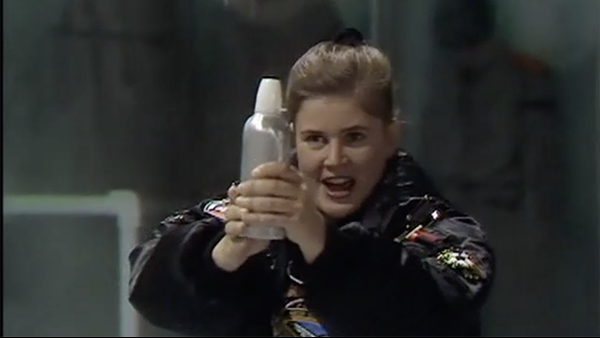
The above still is from one of the things I have made this year which is a short film called A Cake For Jim Broadbent. If you would like to see why I am handing a package to an attractive young lady, there's an opportunity to watch said short until the end of April at the FirstGlance Film Festival online shorts competition.
(You can also vote on whether you like the film, though you are not obliged to, and if you want your vote to count you need to watch at least two other films in the contest all the way through and vote on them too.)
And it's only five minutes long and you're due a break, so what are you waiting for?!! Get thee HERE.
A question of justice
Not a witty blog, this, or a carefully constructed argument slash diatribe. Just a question, because I am genuinely baffled. These stories that seem to proliferate in newspapers at the moment about miscarriages of justice in our legal system - I mean the UK's legal system, the one that I'd be tried by if I happened to be standing in the wrong place during a protest or pressured into a bad decision by an abusive partner or even (and this is the most worrying from a personal point of view) were I to write something slightly ill-considered on the internet - those stories. Is that a new thing, then?
I mean, I've read Dickens, I know that injustice in the legal system isn't a new thing. But haven't we moved on since then? Or has it ever been thus?
And either way, why do we continue to entrust our justice to judges who are, at best, out-of-touch to the point of ignorance, or worse value justice only for those who make the most money, and worst of all are capable of making decisions which shit all over human rights and moral decency and leave criminals free while their victims go to jail?
I'm sure these are exceptional cases. Well, pretty sure. Actually I'm not sure at all, because in any system that worked how could any of these things happen???
When musical theatre grows up
Two conflicting articles here: Neil Tennant (the Pet Shop Boy) arguing that Matilda demonstrates how divorced the musical has become from cutting edge popular music, and Charlotte Skeoch (not a Pet Shop Boy but apparently a ‘critic of anything that moves’) touting Matilda as ‘the start of a creative musical revolution’.
Actually they’re both a little bit right. Tennant is correct in his observation that Matilda, and along with it every commercially successful West End musical of the last 20 years (discounting the revivals or the ones based on songs that already exist), contain ‘the sort of music you only find in musicals’ and have ‘no relevance to contemporary music’. (Let’s ignore the ironic fact that his own foray into musical theatre in 2001 was a commercial flop, because it means I can also ignore the fact that he once sat through a musical that I wrote and maybe considers it guilty of the same shortcomings.)
But Tennant’s conclusion, that musical theatre ought to be turning out more pop hits like in the Good Old Days when Lloyd Webber owned the West End, shows a tragic lack of awareness of the real potential of musical theatre. Yes, in its infancy the musical was the source of all the popular tunes, but that was before popular music had outlets like regular air play, the UK charts, Top of the Pops, albums, iTunes… it was also before pop music became so heterogeneous that every form it takes is a niche interest. Cutting edge pop music has never been less mainstream.
More to the point, it was also before the likes of Rogers and Hammerstein, and after them Sondheim and his many collaborators (and lesser imitators), changed the musical from a showcase for popular tunes into a serious form of theatre in its own right. Lloyd Webber’s marketing of his early musicals as pop albums, shrewd though it turned out to be, was a hugely regressive step; in the hands of greater practitioners the musical had become far more than a collection of songs. Tennant cites the richness of the songs in Oliver! as an example of pop genius, but ignores the fact that putting a Dickens novel on stage with song and dance taken essentially from a cockney tradition - a Londoner’s response to West Side Story - was a bold and brave artistic idea, far from the obvious commercial decision it may seem to us in retrospect. It’s worth remembering that Lionel Bart’s theatre writing had emerged from collaborations with the groundbreaking Theatre Workshop under Joan Littlewood, whose Oh! What a Lovely War was an even more influential piece of musical theatre, and not because it contained any pop hits.
For musical theatre to be cutting edge again it needs more than good songs – it needs to be cutting edge theatre as well. Which brings us to Matilda, which (as Charlotte Skeoch raves, seemingly forgetting her mandate to criticise anything that moves) is a gloriously crafted piece of theatre, packed full of inventive staging and performed by a wonderful and energetic cast. It also looks gorgeous, though what makes the production special is that you could put it on in a barn and it would still be brilliant.
And yet… what Skeoch conspicuously fails to talk about is the music itself (her fleeting reference to ‘heart warming musical surges’ calls to mind Tennant’s paragraph on theatre critics having 'no value system for judging the music in musical theatre’). That is because the music is peripheral to everything that makes the show brilliant; indeed, you could remove the songs altogether and it would still work.
Apart from anything else, there’s just not enough of them. There are whole sections in which Matilda tells a story-within-the-story, speaking them over underscore which pastiches circus music as if the production team forgot it was a musical and thought they were making a film. (In fact, in one of the most disappointing sections, the story reaches a climax and is accompanied by film; the inventiveness of the production makes way for lazy special effects, all the more frustrating because the pseudo-shadow puppet style of the film sequence could have been thrilling if performed by real shadow puppets.) These sections, the most melodramatic in the show, are crying out to be sung.
But there’s little attempt at a coherent musical journey in this show, none of the sustained musical argument that the greatest musicals have shown is possible, and the songs are rarely interested in telling story. Instead they hold up the action to show off Tim Minchin’s lyrical cleverness or to let the choreography take over. It’s just as well that it does, because the songs themselves don’t stand up on their own - there are a few hummable tunes here and there and “When I Grow Up” stuck in my head for a while (though I have a feeling that’s more to do with the image that accompanied it) but, as Neil Tennant says, nothing that will have any life outside the theatre. If a musical is going to be about set pieces, it needs to bursting with one great tune after another like an Anything Goes or indeed an Oliver! - this doesn’t even come close. (I won’t even get onto the poverty of harmonic and textural vocabulary in the score because, let’s face it, that is endemic not just in theatre music but in most commercial music full stop.)
It’s refreshing and thrilling to see a West End show which contains such beautifully crafted theatre; but if musical theatre is going to be cutting edge, it’s going to need scores that are every bit as thoroughly crafted. Music needs to be at the centre of any ‘creative musical revolution’ and, as far as I can see, we’re still a long way off.
'A chilling realisation.'
Just in case you missed the complete lack of astonishment across twitter, it turns out that the hoax @OfficialGlitter account in which somebody pretending to be Gary Glitter tweeted about his comeback was in fact a hoax. You can almost hear the collective lack of a gasp.
But this wasn't just a tasteless joke. No, a blog post by somebody called 'Ben' explains that this was actually a 'social experiment' - one which had 'interesting and eye-opening' results. In case you haven't read the post, let me tell you of these astonishing results.
'Ben' begins by reassuring readers that he doesn't actually condone paedophilia himself. Phew, well that's a relief! He had me worried for a minute there, what with pretending to be one. Am I glad that this 'social experiment' was conducted by somebody who doesn't condone paedophilia, as opposed to one of those people who does.
'Ben' goes on to explain that the point of his 'social experiment' was to demonstrate that there might be real child offenders hiding away on twitter. Quite how pretending to be Gary Glitter actually demonstrated this is unclear, since he didn't seem to be very successful at 'hiding away'. Still, we'd better ignore that leap of logic, because if 'Ben' had set up a twitter account pretending to be an anonymous paedophile he most likely wouldn't have had such interesting and eye-opening results.
He briefly concludes that legislation is needed to ban registered sex offenders from using digital communications without supervision ('Ben' is clearly a lawyer of some sort, because that simple solution isn't naïve or problematic at all), that parents need to be properly informed of the dangers of the internet (because of course everyone thinks it's totally safe at the moment) and that 'Social Networking Sites such as Facebook and Twitter need to properly police just who is using their websites' (he doesn't say how, but I'm thinking they could have a box you tick if you’re a convicted paedophile).
Those problems effortlessly solved, he gets on to what would seem to be the main point of his blog: to morally castigate anyone who didn't send @OfficialGlitter an abusive comment.
'Ben' was 'deeply disturbed' at the shocking (underlined) number of positive comments he got, some of which actually seemed to suggest that people want to see Gary Glitter do a Comeback Tour! 'Do people's morals differ when they are online?' he demands to know.
Well... no, as far as I can see, there are just some people who like Gary Glitter's music and are excited at the prospect of seeing him perform. And baffling though I find that on musical grounds, there is nothing in Glitter's crime itself that makes me uncomfortable about him, y'know, singing. It's not like there'd be children in his audiences. Irrespective of this, anyone innocently showing excitement at Glitter's career restarting, or a shred of forgiveness for a man who 'Ben' had rather convincingly pretended wanted to move on, comes in for a moral beating.
Next up for castigation are a number of people who I would presume saw that @OfficialGlitter was a hoax (a lot of us did) and made a joke about it. A joke!!! MY GOD THERE ARE PEOPLE MAKING TASTELESS JOKES ON TWITTER!!! Who knew?!?!!
Everyone from Piers Morgan to 'loud-mouthed footballer Joey Barton' comes in for criticism (though Barton's attitude to Glitter hardly seems to be supportive); 'have people forgotten what hideous crimes that Mr Glitter committed?' 'Ben' ungrammatically cries.
Um... no. Demonstrably, they have remembered, or the jokes wouldn't make any sense. But maybe 'Ben' is just being rhetorical, because after all this is an issue of 'basic human morality'.
He goes on to express shock that the media brought further publicity to Mr Glitter by featuring an article on his comeback. His moral outrage is complete: celebrities are actually using twitter to get publicity. Newspapers are actually reporting things that happen on the internet. Even when paedophiles are involved.
The post finishes by summing up what we all need to do about the terrible realisations he has 'hit' us with, giving thanks to the media who brought the @OfficialGlitter account to everyone's attention (which is curious because only a few lines ago the same media were blamed for being nearly 'responsible for putting money into Glitter’s pocket') and a special mention for all those who sent hate and abuse and started the #GetGlitterOffTwitter campaign, because they're the people who show that 'a majority of Britain still has their morals intact'.
The smug, moralising tone of the blog post, replete with indignant underlinings and a surfeit of melodramatic adjectives, is all too close to the News of the World anti-paedophile campaign (it says a lot that most of the news reports on this 'social experiment' are so far mostly in the gutter press). Apart from the serious questions about the irresponsibility of this kind of journalism (because that's all this is), who exactly is 'Ben' to lecture us on our moral wellbeing? Where's the link to his own twitter feed so we can check that he has never made an ill-judged joke or followed somebody with a criminal record?
In fact, all we really know about 'Ben' - except that he is no great knowledge on internet law or the English language - is that he spent several days pretending to be Gary Glitter on twitter.
Clearly a person to take our basic moral values from, then.
"Teetering on the brink of a scandal"
People who have been closely following this blog (or indeed my life) over the years might have gathered that I once wrote a novel and, following a protracted discussion about its title, failed to get it published. Half of it has been sitting on the Authonomy website since said failure, where it has slowly gathered the internet equivalent of dust, albeit in the occasional quite gratifying form of nice comments.
So it's especially nice that Authonomy have decided they want to do something with it and will be putting it out as a HarperCollins digital original as part of their new imprint.
Exciting as this news is, it is as nothing to my excitement that in the short time since they made this announcement, an anonymous commenter on the blog has pre-emptively accused me of blasphemy. Is it wrong to hope that one day I'll arrive home and be confronted by people who haven't read the book wielding banners expressing disgust and outrage? I can fantasise; the publicity would certainly make up for the demographic who have been vocal in forums in expressing the equally irrational view that nobody would ever want to read a book with Jesus in. Apart from the speculation about my religious proclivities, others have been wondering whether I'm a fake person altogether, made up by Scott Pack to con the general public. Perhaps if I drop hints in the right places I can persuade people that I'm Jesus himself paving the way for a comeback.
The truth is, as always, less interesting than all of those things, but it is quite interesting and if nothing else shows what a tough and rocky and irritating and unpredictable road the way to publication is, and in case it is useful or at least entertaining to other struggling writers I will share it in detail closer to the date of publication. So watch this space. This one here.
In the meantime I have to perform a not-insubstantial rewrite; whilst on Authonomy the book gathered a fair bit of advice, some of which was very pertinent and some of which just pissed me off and much of which, even the stuff that pissed me off, turns out to have had a degree of wisdom in it. So if that was you... ta, advice taken.
And in order that I might continue to benefit from other people's wisdom, I'm minded to start putting up chapters from The Difficult Second Novel. So watch that space. That one, over there.