Getting it Published #7: Genesis

More Tea, Jesus? has been perceived by some as rather a neat, parochial book. In fact, being the first novel I ever finished (if not actually the first one I ever started) it has a huge number of ideas and influences rattling around in it, so I’m never sure whether to be baffled or insulted when the ‘cosy’ or ‘neat’ epithets are applied; to my mind it’s a miracle if it feels like it has any sense of cohesion at all. Here are a few of the more obvious elements that went into the cocktail.

P. G. Wodehouse

Perhaps a foolish opening gambit, given that any comparisons will reflect negatively on my own work, but there is so much to admire in the greatest of Wodehouse’s comic writing that it would be wilfully deceptive to pretend I hadn’t been influenced by it. Probably a lot more obviously in earlier drafts. In its earliest form it opened with an introduction to the village through the eyes of an anthropomorphic sun, which I mercifully realised I had copied directly from a Wodehouse I read as a child (I’m pretty sure it’s Spring Fever) and expunged quickly (though some vestiges may remain). Although my breezy prose may all too often show Wodehouse peeping through at the linings, the way in which I was more consciously influenced was in the story’s structure; I love how Wodehouse builds up a whole community of characters in a novel through any number of subplots, which trundle alongside the main story and overlap with it when you’re least expecting them to. This is why I didn’t feel too guilty about spending so long on Bernard Lomas’ obsessive fads or his plot to steal Ted Sloper’s harpsichord. I suppose one might see more than a passing similarity between the scene in which Ted gets very drunk before the church entertainment and Gussie Finknottle’s speech to Market Snodsbury Grammar School, but it would be insane to invite comparisons with one of the finest pieces of sustained comic writing in the whole of English literature.

By the same argument, it would be extraordinarily foolish to write an entire blog about how basically my biggest literary influence of all is Charles Dickens.

The Church and Sexuality

This is the theme of one of the more substantial subplots and it looks even prescient now than when I was writing the novel. The way in which most of the priests in the story show thoughtful, accepting and supportive attitudes on the issue whereas half of the congregation have an unpleasant knee-jerk reaction towards the very idea of ‘an homosexual’, reflects the recent vote on women bishops in which the House of Laity showed themselves (again) to be by far the most conservative part of the Anglican Church. Different issues, of course, but they might as well be the same for the way a set of principles are clung to in the face of logic, compassion and even theology. I’m fairly certain that an immediate survey of churchgoers would show the biggest concentration of homophobia to be amongst ordinary heterosexuals who have never studied scripture in any great depth, whatever impression is given by very vocal handful of priests.

Priests

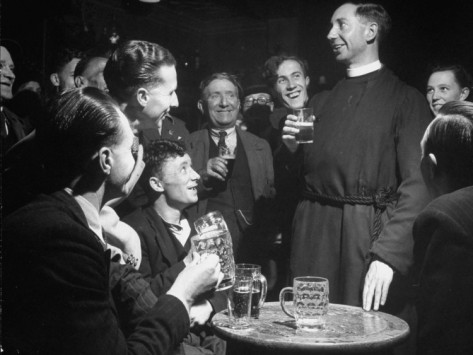
Through various twists of fate, I seem to have made friends with a large and growing number of priests over the years (once you’ve been invited to one ordination party you’re going to meet a whole new batch and several more invitations follow – they’re just so damn friendly, these priests). Much as I would like to take the credit for many of the stranger episodes in the book, they are most likely to be copied from real life. A priest drinking to the point that they become so red they think they have the stigmata? Check. A priest making an omelette in a family service? Check. A priest dashing to turn off a CD because the word ‘alleluia’ is about to feature and it is Lent? Check. Even though some of the characters on whom stories are based weren’t priests at the time, they have all become priests now. I like to think that I am in some way responsible.

The slightly barmy sad woman I met in a pub

I was once sitting with some trainee priests in a pub and a woman who was definitely drunk and probably a bit mad and who had just lost her mother decided to unload a lot of her unworked-through grief on us, perhaps because she sensed that trainee priests would make for a sensitive audience. In fact, I suspect we were rather less sensitive than we should have been, partly because what she said was so barking mad. Largely stuff about consenting animals. I already had plenty of human misery in my novel, but nothing at that point about consenting animals, so that’s the bit I borrowed.

William Burroughs

An unlikely sounding one, but when I wrote the first draft I was still young and pretentious enough to be playing around with techniques I had no idea how to use, and the cut-and-paste thing appealed to me a lot. It came in especially useful when dealing with really tricky things I didn’t know how to write using proper sentences. Eventually I realised that the best way to write these bits, even if I did it by messing with the English language, was to do it deliberately, but the random approach was a valuable starting point. Most of those bits have, again, been rewritten altogether because they jarred so obviously with everything around them, but I remain quite proud of Chapter 14 which aims quite high and I reckon succeeds in its depiction of Gerard Feehan’s rude awakening into adulthood. It could so easily have been dreadful – mawkish or unpleasant or just plain pornographic – and I don’t think I would have approached it in the way I did if I hadn’t been so moved by the end of Cities of the Red Night once upon a time.

The vicars and tarts party

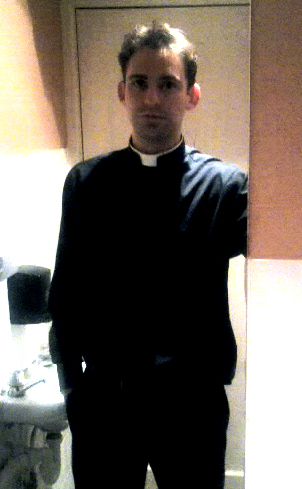
There is very little in the book that is even semi-autobiographical, but I once went to a vicars and tarts party and had a rather profound experience when I happened to glance at myself in a toilet mirror and realised I looked better as a vicar than I did as a real person (or indeed as a tart) and briefly contemplated taking the cloth purely out of vanity. Not only did I feel my evening as a vicar equipped me to write with absolute authority about what it is like to be a vicar, but the whole anecdote found its way into the novel pretty much unchanged, in the mouth of a vicar who actually had taken the cloth after the same experience.
04-02-07_00202

All of the above, and much more, were rattling around my head as influences when I wrote More Tea, Jesus?. Surprisingly, however, one of the things that was not amongst them was:

Parish Choirs

I finished the first draft of More Tea, Jesus? a little while before I became an actual director of a parish choir. My lot were quite a talented bunch, so there wasn’t even any material to be incorporated into later drafts. That said, given that up until then I had very little experience either of singing with or listening to parish choirs, it’s amazing how much I got right about the rehearsal process.
Getting it Published #6: Judges

It was Clare Christian, the original editor of More Tea, Jesus?, who suggested it might be worth putting it on Authonomy. The website was pretty new at the time and was designed to unearth the brightest, freshest new literature through a community of writers philanthropically reading new work and pushing the good stuff ever closer to the desk of an editor at HarperCollins.

In fact, for most authors and most books – even the good stuff – it’s nothing of the sort.

Even back then, when the website was much, much smaller, the Holy Grail of the editor’s desk required a concerted effort to maintain support and a degree of luck in terms of timing. I didn’t have time to make any kind of effort at all in this respect. To get noticed you really do need to have time to spend on self-publicity, cultivating relationships and – vitally – reading other people’s books. It is a community quite rightly based on reciprocation and, having recently found myself in a full-time composing job, I had little time with which to reciprocate.

Not that the editor’s desk is the only reason to join Authonomy: far from it. The value of a community of writers and enthusiastic readers commenting on your work is self-explanatory. But again, this was not something I was in any position to appreciate; I had already been through the lengthy editorial process and questioned, rewritten and chopped the novel as much as I could bear. The last thing I wanted was a load of well-meaning suggestions about what needed changing.

The prologue came in for quite a battering from a few people who either thought prologues were plain unnecessary or that it slowed the pace. In the case of the latter they were absolutely right, but they hadn’t considered the dramatic importance of the prologue (do you really begin a novel about the apocalypse with a vicar giving a sermon about an omelette?) and they weren’t aware that it was balanced by an epilogue, the mirroring of the two being one of the important satirical points of the novel, not to mention a (funnyish) joke. When More Tea, Jesus? was eventually giving a publishing contract, I went back to the comments that had been written about it and found much of them to be wise and useful in the rewrite that followed. I didn’t get rid of the prologue, but with the benefit of a bit of distance I did see that it wasn’t working and made big changes, apart from anything else making it considerably shorter. However, back when I first started using Authonomy I had not so long ago been on the verge of having this novel published, so I wasn’t in a great emotional place to listen to people whose only basis for criticism was their own writing, which was itself of… ah… variable quality.

I have read some brilliant books on Authonomy. Not many, but some, actually brilliant books. It is reassuring to see that many of those were noticed by other people and have found success since.1 Other books on Authonomy are full of good ideas but desperately in need of an editor, some read like fan fiction or school essays and some are so badly written or lacking in basic punctuation that you wonder if the writer ever read it back after they wrote it. It is a great cross section of the thousands of people who feel they have a book in them and have actually been bothered to write it down, which I think is great (though I do think people ought to self-edit their work a bit if they’re going to put it on the internet2). If nothing else, it shows that publishers, or at the very least editors, do still have a vital role to play in the whole publishing process.

(Mind you, there’s plenty of mediocre stuff put out by publishers as well. And some of the brilliant writing on Authonomy is so refreshingly uncommercial and therefore I presume unpublishable that it makes my youthful Canterbury Tales parody look like Dan Brown. I digress.)

Unfortunately, the vague promise of a fast-track route to publication has given Authonomy a sometimes rather competitive (or just plain cynical) atmosphere, in which people desperately try to bump their own work up the ratings by commenting nicely on somebody else’s after skimming through the first chapter (another reason the website didn’t and doesn’t work terribly well for me, because my inability to lie about a book I don’t think is very good makes it seem as though I hardly ever read anything on there). There is enough empty praise floating around to give you an inflated view of your own brilliance, if you’re not savvy enough to assess the quality of the criticism you’ve received, and it leads to a kind of Britain’s Got Talent syndrome where everybody thinks they’ve got something astonishing to offer the world without considering the hard work that ought to form a part of their contribution.

The forums in particular are rife with resentment from authors who feel their work is being unfairly ignored or that they are somehow being duped or taken advantage of by the powers-that-be. It is something which I experienced in a pretty full-on way when the acquisition of More Tea, Jesus? was announced: Scott Pack had been brought into the Authonomy team to ‘shake the site up a bit, iron out some of the kinks and find some books to publish’ and in keeping with this remit he plucked my book from the depths of the website and put it in front of the readers. But the announcement was followed by an explosion of fury in the forums from people who seemed to think they were uncovering a conspiracy (my previous association with Scott was already documented on the world wide web so it didn’t take a lot of uncovering). Suddenly I was under the scrutiny of people questioning why I had or had not been on Authonomy at various times, to the extent that they seemed to be (inaccurately) taking note of the length of time between my visits. The suggestion was that if I popped in it was to publicise my book and if I didn’t I wasn’t a serious member of the community. It was even suggested that my account had been retrospectively fabricated. It was nothing more or less than a collective cry of outrage from people who thought their books should have been published and not mine. And it wasn’t a lot of fun to be at the receiving end of it.

If you’re starting to think all this paints a rather negative picture of Authonomy, then STOP! Authonomy is brilliant. It is a website wonderfully full of novels, finished and unfinished, absolutely brilliant and utterly crap, and the people who wrote them encouraging each other to write more. Authonomy is doing something that plenty of schools are failing to do: it is inspiring creativity, it is getting people to write stuff down, it is even (sometimes) getting people to go back over what they have written and make it better. When I got the news that More Tea, Jesus? was going to be published I realised that it was badly in need of a rewrite and took it off the website; but I tentatively replaced it with a rather less thoroughly worked through (and completely uncommercial) novel, about which I have now received a great deal of really useful feedback, some of it from people who demonstrably know what they’re talking about. I have had a wealth of advice and feedback from kind, committed readers who have given their thoughts and encouragement for nothing except perhaps the agreement of a mutual read. That is exactly the spirit in which I would wholeheartedly recommend aspiring writers use the website.

I also seem to have recently started receiving propositions from a young lady called Donzo on the website. I get the impression she hasn’t read my book, but she seems keen on me so it’s a start.

1The Morning Drop, a startlingly good first novel by Andrew Hughes, sticks in my memory still, and I’m delighted to see will be published by Doubleday/Transworld at some point in the next year or so.
2Insert your own snarky joke about this blog here, if you like.

Getting it Published #5: Lamentations

Apologies for the delay in resuming this rather lengthy saga. You can reward your patience by visiting the new webpage for More Tea, Jesus? or liking it on Facebook. Or, if you haven’t already read it, you could read it.

It would certainly be a good time to do that, what with the recent women bishops farrago and Church House regularly putting out anonymous statements about gay marriage that don’t represent the views of the average member of the Anglican Church any more than Mike Freer represents the average member of the Conservative party. What with the Anglican Church’s penchant for finding itself misrepresented by the media – willfully or otherwise – even when I was writing More Tea, Jesus? I was rather hoping that it would not only be timely, but also commercial. After all, my book was all about religious and sexual politics, distortion of facts by the media and social injustice, all of which have been selling points for literature for centuries. And I had already had the stamp of approval from one publisher – so they had gone into liquidation, but surely I could find another who would see the book’s potential to reach a wide audience?

It didn’t take long to find a literary agent who agreed with me. Probably that was something I should have done already, but the fact that I’d already had a deal with this book (not to mention all the editorial input it had been given) certainly helped speed things up.

Sadly, that was where my luck ended. After an enthusiastic start and exciting emails about all the publishers the book had gone to, I received a sobering follow-up from my agent saying that nobody was interested, and advising me not to let it get me down, with the not-very-comforting reminder that it took Graham Greene six novels to get published. Frankly the idea of having to write six novels was a pretty depressing idea and I did not have the advantage of being Graham Greene either.

My agent was kind enough to send me the offer sheet she had sent out, enabling me to see not only how many publishers had rejected my novel but the reasons why. That was perhaps the most soul destroying thing of all: it was clear from the comments that I had not written a bad or an unlikeable book – quite the opposite, in fact, with comments like ‘absolutely wonderful’ all over the place – but that nevertheless, not one publisher wanted to risk taking it on because they didn’t think it would sell.

For all the sexual politics, media and social commentary I thought my work communicated, the stifling cloud of the Anglican communion had done its work: what the comments made clear was that publishers couldn’t see past the cosy, parochial exterior of the church. Almost a case of life imitating art, given some of the horrors hidden by the church in the book. Curiously, readers’ reviews of More Tea, Jesus? show that this is still the case – it surprises me how often the word ‘charming’ is used to describe it when I consider some of the genuinely awful things that happen in the story. Perhaps it feels more raw to me because it was my own pain and frustration that went into it, or perhaps my own flippant tongue is more distracting than I imagined. But one friend of mine wrote to me, when he finished an early draft of the final chapter, ‘that’s the most depressing thing I have read in a long time’ – and I think he had it about right.

All that aside, it was still pretty bloody annoying having publishers telling me that religious comedy didn’t sell, given that it was (and is) demonstrably untrue. (Ironically, this all came hot on the heels of several theatre producers telling me that Tony Blair – the Musical was lovely but politics in the theatre meant commercial death so thank you but no thank you. And shortly before Enron transferred to the West End. But new musicals in the West End seem to be flourishing, so what do I know?)

It is worth bearing in mind a couple of things: firstly, this all happened under the shadow of the beginnings of the financial crisis from which the country is still failing to recover, and publishers were, by all accounts, running a mile from anything which didn’t immediately scream commercial success. Secondly, the very nature of publishing had started to change – people had started to buy their books online and read them on strange mechanical devices and most publishers didn’t have the first idea how they were going to carry on making money. Many of them still don’t.

In other words, I had written the wrong book at the wrong time. And short of writing five more of them, I had been offered no useful suggestions as to what I could do about it.

Next episode: Judges – along comes Authonomy.

Getting it Published #4: 2 Chronicles

The title More Tea, Jesus has already attracted a fair amount of comment. I rarely venture near the Authonomy forums (for reasons which will become apparent) but on one of my infrequent visits I noticed that the title has come up for quite a bit of discussion, with many people voicing the opinion that it is a brilliant, eye-catching title which they wish they’d thought of, whilst others state rather bluntly that they are of the opinion that it is a stupid title, one American lady going so far as to repeatedly describe it as a ‘stoopid’ title and, at points of especial agitation, a ‘stooopid’ title. Part of the problem for many people would appear to be that Americans are unfamiliar with the phrase ‘More tea, Vicar?’ and for one person the problem is specifically with the comma. And one man vehemently declares that, however good the book is, he will never read a book with a title like that.

What I’m about to say may surprise all of the above, but I’m going to say it most particularly for the benefit of the man who says he will never read my book because of the title: I don’t much like it either.

Indeed, I actively disliked it initially: it wasn’t my original title, it doesn’t adequately sum up the scale of the issues in the book or the style of the humour it contains, it is not clever and subversive like my original title and it is, let’s face it, a bit twee. It calls to mind village fêtes when the book delves into areas of sexual politics, social inequality, religious fanaticism and, lest we forget, the apocalypse. Albeit in the context of a village which has fêtes.

And there’s the point: a book title, these days at least, is not about summing up the complexity and subtlety of what follows, it is about getting people to look at it in the first place. Whether I like it or not, the superficially cosy setting (and perhaps the witty juxtaposition of the Christ with it) is the ‘hook’ for what I have written.

If you find the title offends you to the extent that you can not read the book, you could always skip the front cover and pretend that it is still going by its original title, which was Mere Anarchy.

It was Scott Pack who said that this was a problem. He said it made the book sound like science fiction. Think of another one, he said. I acknowledged the thought then ignored it, hoping that he might just forget he’d ever had it himself – because I loved the title I had. Mere Anarchy, as well as summing up the conflict between the commonplace and the apocalyptic which is so central to the novel, is a wonderful expression taken from W. B. Yeats’ poem ‘The Second Coming’ – you see, it references the second coming, in a subtle and everso clever way! Clever Lark, clever clever title, and (beating mental fists against an imaginary wall) no I won’t let go of it!

Then I got an email from the Friday Books administrator which said, rather bluntly, ‘what’s the title?’.

Realising that the best way to demonstrate the brilliance of Mere Anarchy was to show how truly terrible the alternatives were, so I hastily bashed out some possibilities. University was good – or rather, bad – training for this: if you were doing a comedy show you would sit in a room brainstorming possible names for two hours and then, having reached a point where all discernment had long since departed the room and settled down for a long snooze, you would plump for one of the ones that seemed either least offensive or most witty. The next day you’d wake up and realise you were doing a show called ‘The Rotation of Horatio Sparkins’ or ‘Now That’s What I Call Prozac’. My God, I was even in a company called Pilgrims Who Jump.

The alternatives to Mere Anarchy that I came up with were indeed, for the most part, truly terrible. I’ve just discovered the very email I sent to Friday Books and can’t quite believe how terrible some of them are. But as it’s a useful exercise in self-humiliation, I shall reproduce the list (which I noted displayed ‘an unhealthy obsession with caffeinated beverages’) here. This is it:

The inconvenient apocalypse
More tea, Jesus?
Sex, tea and judgement day
The day the church noticed God
There’s still time for tea on judgement day
Just a second coming
Jesus doesn’t drink instant coffee
The reluctant bride

At the end of the list I noted: ‘I have my favourites, though none of them are quite doing it for me.’

No kidding?! What baffles me now is which of them could possibly have been my favourites. As lists go, it’s bloody horrible.

The funny thing is, I had incorrectly remembered More Tea, Jesus? as being at the bottom of the list – the final, hastily typed option, the joker in the pack, the worst of the lot (which it demonstrably isn’t). I certainly remember disliking it fairly intensely.

So imagine my surprise when Scott didn’t send back an email which said ‘I realise from your list that Mere Anarchy really is the best title for your book, being as I now see a clever, witty and entirely appropriate summation of its contents. I was wrong, you were right – sorry!’ but instead sent and email which simply said: ‘I like More Tea, Jesus?

I sent a panicky email back pointing out to Scott that he had gone and chosen the worst title of the lot and it didn’t do what the title needed to and really really More Tea, Jesus? was a terrible title. To which Scott responded with a kind but straightforward email explaining that I had written a lovely book but now I needed to just shut up and let them sell it to people.

The important difference between Scott Pack and me in this scenario is that he knows how to sell books and I don’t. And I sort of got it when I saw the cover design – I recognised how it might leap out at people, in a way that Mere Anarchy probably wouldn’t. It’s also fair to say that, during the post-Friday Books trials that were shortly to follow, the manuscript certainly attracted more interest from publishers than it had under the previous title.

In any case, the title Mere Anarchy has now been taken – by Woody Allen, of all people. It’s not a science fiction book and I’m pretty darn sure his book doesn’t contrast the commonplace with the apocalyptic in a way that justifies the appropriation. On the other hand, he gets to write ‘Woody Allen’ on the cover of his book, which probably means a lot more in terms of sales.

61WTj21o7KL

Next episode: Lamentations – back to square one.

Getting it Published #3: 1 Chronicles

First things first: IT IS NOW ON SALE!!! And for one month only, it is going for a mere 99p. It will get more expensive after that, so even if you don’t yet own a Kindle, I suggest you snap it up all the same……

Now let’s get down to the nitty gritty: how do you go about getting published?

I had no idea. I still don’t, really, but I had even less of an idea back when I finished More Tea, Jesus?. I did at least have no idea from a standpoint of experience: a juvenile comic rewrite of The Canterbury Tales (all in Middle English and rhyming couplets replete with witty footnotes, months of work which I have a gut-wrenching feeling is now Lost For Ever) and a slightly less juvenile (but actually very juvenile) attempt at a novella, plus subsequent juvenile attempts to get them published, had left some things clear:

1. Nobody wants to publish something written entirely in Middle English.

2. Nobody wants to publish a single novella.

3. The only publishers who actually want you to approach them are the ones who are going to charge you for the privilege of being published.

Eight months after my first lightning strike of inspiration for More Tea, Jesus?, I had a complete novel not written in Middle English. But I still had no idea about how to get it published without paying someone to do it, something which I simply Would Not Do (not out of any great principle so much as a lack of money, though there are also excellent reasons not to go down that route if you’re contemplating it).

Fortunately, I’d made a few friends who I thought might have a better idea. The journalist who had written nice things about my improv show in Edinburgh 2003 had turned out to be the endlessly interesting1 Paul Carr, who had continued our acquaintance by using me as a writer for The Friday Thing and then gone and announced the launch of a new publishing company. Could this be the foot in the door I needed to see my novel on the shelves of Waterstones?

Not really. The Friday Project were exclusively concerned with turning web material into books, so More Tea, Jesus? wasn’t for them. I made co-founder Clare Christian read it anyway. I also plied her for information and did some ostentatious networking at a few launch parties, thus managing to gather a small list of publishers I thought might be interested in my novel, but who turned out not to be.

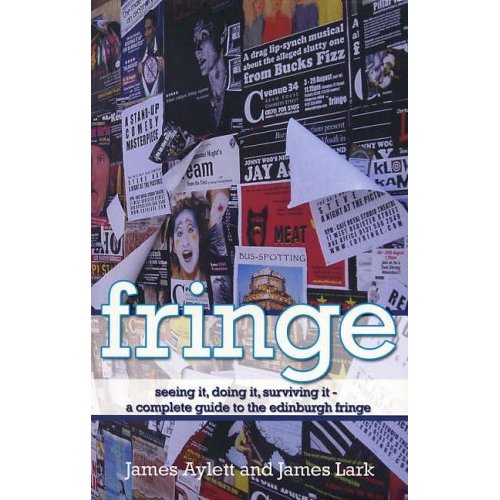
In the meantime, I pitched The Friday Project an idea based on a series of articles I had written about my experiences at the 2004 Edinburgh Fringe, which they thought was a jolly good idea, and co-authored a self-indulgent and ultimately uncommercial book called Fringe2.

Fringe book cover

It’s pretty easy to forget about your unpublished novel when you’re working on an actual real commission, and in any case, More Tea, Jesus? was probably sitting on somebody’s desk at the time. That’s the great thing about leaving your manuscript on somebody’s desk – you feel like you’re actually getting somewhere and you don’t have to do anything! My word, the months and years that More Tea, Jesus? sat on desks while nothing at all happened… In my defence, agents and publishers were less keen on email submissions then than they seem to be now and I didn’t own a printer, so every time I sent out the manuscript I needed to wait for its return before I could get it to the next person on the list.

But The Friday Project were growing: first they announced that they had hired Scott Pack as Commercial Director, then they launched Friday Fiction, and suddenly More Tea, Jesus? WAS the kind of thing they might print. But before I could find a tactful way of asking Clare if she remembered reading that novel I’d written all those years ago, she got in touch with me: she had shown More Tea, Jesus? to Scott and he liked it, and if the man once described as ‘the most powerful man in the books trade’ liked it she couldn’t see any reason not to publish it. So please could they publish it?

I told her I’d think about it.

So I found myself (metaphorically) dusting off the old novel and (literally) giving it a good going over. Here’s a rare good piece of advice if you have a novel you want published: revisit it every few years. I can’t understate the value of going back to your work when enough time has passed for you to be able to look at it dispassionately; bits I had loved before made me cringe with embarrassment and were hurriedly cut or rewritten. My habit of overwriting everything and using four long words when one short one would suffice was horribly apparent and led to a healthy shortening of the word count – which I managed to bump up again by developing some scenarios which hadn’t fully reached their comic potential.

There was also the all-important editorial input – little details mostly, amongst them Scott’s comment that some of the characters had rather silly names, which I have blogged about elsewhere. For the most part, the rewrite was a simple one – details rather than structure. Not so with the ending, though.

In its original form the plot threads in More Tea, Jesus? were all resolved three chapters before the end but the story kept on going. There was an excellent reason for this: the plot threads in the book are about the characters in the parish, whose stories just happen to have been complicated by the arrival of Jesus; tying off these plot threads didn’t, therefore, deal with the small matter of the Second Coming itself. In sorting this out, the final chapters also became the kind of satirical heart of the novel, though it’s dangerous making statements like that because it sounds a) desperate and b) wanky.

Structurally, certainly, it was messy. I resolved the issue by splitting the book into three sections (rather than the two it was already in – B.C. and A.D., essentially) and dealing with those last few chapters in the passage of Holy Week. Although this actually lengthened the section it made it feel quicker, and although the structure was still weird at least I was embracing it rather than trying to squirrel it away in a few extraneous chapters.

Perhaps inevitably, it came in for questioning, and rightly so. Also rightly, when I argued that the section was ‘the satirical heart of the novel’, I was told to see if it worked any other way all the same.

I can’t remember how many versions I wrote of that final section – one solution was to turn the section into a single chapter, which was overlong and messy again, and the most extreme version squeezed the whole lot into a short epilogue, which felt tidy but, on analysis, left the novel unfinished. The point is, I tried the alternatives – and yes, it was very satisfying when the publishers agreed with me that the original solution had been the best.

The copy edit was also fun, given my propensity for breaking (or at least bending) certain established conventions in the use of the English language, particularly in dialogue. Always useful to be challenged on such incorrectness, because it separates the bits that really need to be like that from the bits that are just lazy.

But finally it was ‘locked off’: manuscript at the ready, blurb written for the back, heartfelt dedication laboured over and a cover designed, the book looked ready to go in a month or so and it was all frankly jolly exciting.

Then Friday Books went into liquidation.

Next episode: 2 Chronicles – the issue of the title…

1Not always for the right reasons.
2Curiously, Fringe now seems to have been turned into a successful American science fiction series, but since they’ve ditched the Edinburgh setting and all of the stories I wrote – even the one about Paul Daniels – we don’t get any royalties from it.

Getting it Published #2: Job

So I was sitting in chapel, my mind working furiously to counteract the tedium being forced upon us by the preacher who seemed determined to outstay his rather limited welcome, and as I scanned the rows of parishioners in the pews, assigning to them a completely unfair set of character flaws based only on what they looked like, anecdotal evidence and my own experience of Anglican congregations, what I thought was ‘I wonder what their reaction would be if Jesus made a reappearance now?’ And the answer which came immediately to mind was, ‘they probably wouldn’t even notice.’

On this conceit was the whole idea for the novel built. There were other things heaped on top of it, naturally; the stories I had come into contact with by spending too much time with trainee priests were enough to flesh out many a scenario and character, and the faces in the congregation were an additional inspiration. I had been particularly tickled by one ordinand’s anecdote involving an omelette and it gave me the structure for an opening chapter which I had virtually sketched it out word for word in my head, along with the basic content of the three chapters which would follow, by the time the old duffer standing at the front of the chapel finished talking.

It says something about the length of the sermon that I had such a strong conviction by the end of it that I had four chapters of a novel ready to go. This was something which I knew was going to work – forget the faltering, patchy first novel, here was an idea with structure, direction and four chapters that simply needed to be written down – this was it!

What I was lacking was time to write it all down. I don’t recall what my evenings were filled with at the time, but there were various music rehearsals and meetings to go to and I do recall that a furtive glance at my diary during the final hymn was not promising. And I knew that I really had to write my ideas down because they were really going to work – and so fully fleshed out were the ideas by then that if I didn’t get them down it fully fleshed out prose in the next 24 hours or so I felt that something important would be forgotten and lost forever.

I didn’t rush home and start writing as soon as the service finished, however, the reason being that the college chaplain, something of a legend in Cambridge circles for his ability to combine high-end literary and theological ramblings with thrashing out blues on the pub circuit, had organised one of his regular ‘blues, booze and chocolate’ evenings in college. Yes, I had a novel to write, but first things first: I had to guzzle wine and listen to some of the best harmonica playing I’ve ever heard1. In fact I vaguely remember playing the harmonica with the band myself at one point.

What I remember with much more clarity is having a sudden drunken epiphany: if I didn’t have sufficient evening time to bash out my four chapters, why not take a day off work?

To this day I’m not really sure why this idea resulted in such a violent interal struggle with my conscience – I was an office temp, I had no long term commitment to the civil service office in which I’d been billeted and no importance in its day-to-day running: I could take a day off work and would not get paid for it, so I could use the time for my own work with complete impunity. I suppose the main objection my conscience was raising was that I didn’t feel those who ran the office would see writing a novel as a valid reason for excusing myself of a day’s work, so if I were to take a day off I would almost certainly have to tell a lie.

So conflicted was I that I drunkenly phoned one of the trainee priests around whom my social life revolved to ask for advice. Showing how well his training was going, he suggested in measured, priestly tones that I should go to bed and see how I felt in the morning.

How I felt in the morning was that the ideas in my head were still quite a pressing issue, and probably more pressing than whatever data entry the civil service required of me. However, because I remained convinced that they wouldn’t see it that way, I put on my best croaky voice and called in with the news that I was not feeling very well at all. The lovely lady in the office who took the call made little cooing noises of sympathy and instructed to get straight back into bed and sleep it off. I compounded my first falsehood by promising her that I would do just that. So convincing was my performance, in fact, that when I turned up back at work the next day, several people looked at me with great concern and told me I was still looking a bit peaky and oughtn’t I to have stayed at home for another day?

The only way I felt I could morally justify the web of lies I had constructed was if I got out of bed at the usual time and spent at the very least the seven and a half hours I would have been in the office working on my novel. I stuck to my guns and in the end I did the best day’s writing I have ever done – some eleven hours and (I kid you not) 11,000 words later, my four chapters were down and I was still writing.

In other words, skiving worked out very well for me in the end.

Next episode: 1 Chronicles – how to get your novel nearly published but not quite.

1This is not, in fact, an exaggeration; the harmonica player that evening was Steve Lockwood, whose work has to be heard to be believed.

Getting it Published #1: Revelation

First, a disclaimer: for all that my long-awaited novel More Tea, Jesus? is to be published as an e-book next week, I can’t claim that it is at all the result of Knowing What The Hell I’m Doing. If I had known what I was doing, I wouldn’t have done it the way I did it. Various people have asked me to explain how said publication came about, and since it is an interesting story and explains why, on a personal level at least, said novel is long-awaited, I will attempt to do so – but whatever else this story is, it almost certainly is Not The Way To Go About Getting Published Yourself.

That said, I think I can promise to give you a fair number of Things Not To Do If You Want To Get Published Yourself, having done so many of them.

Some eight or nine years ago I was fresh out of college and cheerfully failing to get anywhere in terms of career. I was cheerful because I was young and therefore irrationally optimistic but also because I was being fervently creative in the few hours I had available to me each evening by writing music and collaborating on scripts and producing soundtracks for short films which I would spent the occasional weekend making and occasionally disappearing off to Edinburgh to perform with a narrative improve group which some Guardian reviewer had described as ‘actually, properly, non-ironically great’1.

Where I was failing was in turning this frenetic creative activity into any kind of paid career, something I was painfully conscious of in the hours I spent sitting in offices as a temp doing variations on data entry, which paid the rent but didn’t seem a great outlet for my creative urges.

Because it’s thematically relevant I should also note that my novel was also failing, or had at the very least stalled – that is, my first attempt at a novel, which I had ceremoniously started by hand in a big, beautiful, blue notebook at the Edinburgh Fringe in 2003 and which I had continued to add to on park benches or trains or in pubs for many months until I had accumulated a wealth of character studies, irrelevant scenes, funny vignettes, witty observations and angsty self-reflection, loosely connected by at least two stories which I knew were linked but which needed to join up in a way that was far too complicated for a writer of my limited experience to manage. Not least because I had approached the novel in such a haphazard way, what I ended up with was two big blue notebooks crammed full of ideas and making no sense at all. (Anyone reading who wishes to get published themselves may take note that this was Not A Very Good Way To Approach Writing A Novel)2.

If I was succeeding in one area it was in perpetuating the approximation of a student lifestyle, even if a perpetual studenthood had been denied me by the foibles of government funding. This was partly the result of living in a student town where many of my friends were still students. Some of those friends were students at Westcott House, a church of England theological college rooted firmly in the liberal Anglo-Catholic tradition, so I was spending quite a bit of my time sitting in pubs with trainee priests3. I was also still regularly singing with the chapel choir at my former college, where I would head each Sunday evening for a service of hearty Anglican music with a sermon by a visiting preacher – these visiting preachers came from all walks of life and all branches and denominations of the church, such was the spirit of ecumenicalism in the chapel, a spirit which was ironically embraced by hardly any non-Anglicans in the college but which had to be endured by the small congregation and choir, who were subjected to a very mixed quality of sermon because of it.

Not that I’m suggesting Anglican clergy are necessarily good preachers, but what they do have in their favour – on the whole, at any rate – is an understanding of the importance of brevity. I put this down to a strong choral tradition; no preacher with any sense wants a choir to start to very publically fidget and complain, so will time their sermons accordingly.

I had the idea for More Tea, Jesus? during a sermon from the mouth of somebody who evidently hadn’t benefitted from such a background. Nor did the content of his sermon or the quality of its delivery match the length which he seemed to think it justified. In fact, far more interesting than the preacher was the congregation, who that week had been considerably fleshed out by a visit from the local parish church, with row after row of the varied characters you would expect in such a body, not to mention a young and characterful vicar who, superficially at any rate, could have stepped out of a P. G. Wodehouse novel.

What you have, then, is something approaching a perfect storm: a social life filled with trainee priests, regular involvement with a broadly ecumenical chapel, said chapel full of characters whose very appearance seemed designed to fuel the imagination and an overlong sermon giving said imagination plenty of time to get working.

It other words, the content virtually wrote itself.

If only the rest of the process had turned out to be so effortless.

Next episode: Job – a man being tested or a thing that gets in the way of writing?

1I mention it here partly because it’s a good quote and partly because the journalist who wrote it features in this story later on.
2I came back to this novel five years later, took the few good bits and (I think fairly successfully) pulled together into what became my second novel, is now partly up on Authonomy and awaiting criticism. It is due another draft and if it appears slightly unwieldy and structurally bizarre, the way in which I started to write it ought to explain why.
3Correctly known as ordinands.