Doctor Who: the top ten special features

Doctor Who fans like making lists, and as the 60th anniversary approaches the internet has been inescapably swamped with top tens (or, for the thematically astute, top 60s) of best stories. You know the form: Androzani, Talons, Human Nature/Family of Blood, too many lists featuring The Dalek Invasion of Earth and not enough featuring The Myth Makers.1

I love a good list as much as the next man, but rather than add to the noise and use up more precious, dwindling internet space with a list that will only upset people because of the inclusion of Delta and the Bannermen, let me offer up a top ten of something else that deserves plenty of attention.

Us fans are absolutely spoiled when it comes to home media. Doctor Who on DVD and Blu-ray gets the kind of attention that is generally reserved for cinematic masterpieces, particularly when it comes to what is now troublingly called ‘the classic series’, which has been painstakingly restored a story at a time with a quality and attention to detail that can only be a labour of love by the Doctor Who Restoration Team (I can’t believe anyone involved is getting paid for more than a fraction the hours or expertise they put in). Archive sources have been scoured for the best quality versions, episodes with colour missing have had colour put back into them, missing episodes have been reconstructed or animated, and the whole lot has been released with an abundance of extra features – archive material, related programmes, documentaries new and old, optional surround sound mixes2, optional new special effects3, special editions4, all of which not only maintain the high standard set by some of the very earliest DVD releases but consistently aim to eclipse what has come before.

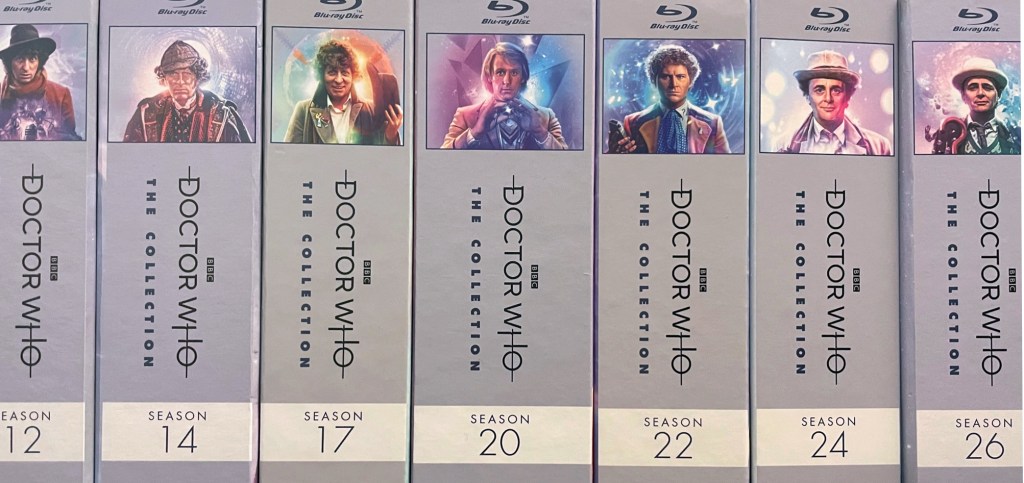
Several volumes of Doctor Who The Collection on Blu-ray, displayed as God intended them without those cardboard sleeves they arrive in.

It’s all too easy to take for granted, but you only have to look at the considerably less special features included with most television Blu-ray releases (and indeed many expensive ‘special editions’ of big budget movies) to see how lucky we are. The gorgeously-packaged and lovingly curated The Collection Blu-rays continue to allow us to view stories we have seen countless times in a new light, and (glances around guiltily) I’d even go so far as to say that some of the extra features are more entertaining than the stories they accompany.

So let’s celebrate some of the best ones. The countdown begins next week!

First up: ‘it would have been such a poison chalice because they hated it so much…’

  1. I bloody love The Dalek Invasion of Earth, though that is for reasons more subjective than objective, and the film version is better. None of that is a reason not to put it on a list, but the recent Doctor Who Magazine readers’ poll has it as the best Hartnell, which suggests that either most fans haven’t even bothered to get to know The Massacre, The Gunfighters, The Myth Makers and The Crusade (to name but a few superior stories), or that most fans are blind to shabby direction and mediocre dialogue. Or that they’re not into history. Perhaps all three. ↩︎
  2. The work Mark Ayres does on sound is breathtaking, and creating surround sound mixes of material recorded for television in the 1970s is not only a labour of love but a labour of determined lunatic virtuoso brilliance. ↩︎
  3. To be honest I’m less keen on the option to watch shonky model effects replaced by shonky CGI that doesn’t match the material around it. It’s even less fathomable when the shonky CGI replaces excellent model effects (cf The Invasion of Time, The Invisible Enemy, Enlightenment). I’ll sort of make an exception for Day of the Daleks, where they went to the trouble of using exactly the same camera and location to shoot new material to improve the underwhelming original with brilliant results – but why go to all that trouble to match the material if you’re going to stick some CGI buildings in as well? All of that said, I fully acknowledge that the optional new effects are just that – optional – and that they’re switched off by default. I’m not complaining about them, they’re just not for me. And if they bring some of you joy – well, a lot of you reckon The Dalek Invasion of Earth is the best Hartnell, so I already think you’re a weird bunch. ↩︎
  4. Some of the McCoy special editions are now more or less the definitive versions of those stories, and with good reason. ↩︎

Neurotic Literature

*clears throat, taps microphone*

Erm… hello?

I don’t know if anybody is still out there reading this blog but if you’re there… hello!

Funny to think that there was once a time when posting opinions on the internet still felt a little bit niche, a little bit special. Back in the early pioneering days of blogging, we were special. Or at least, we felt like we were (and isn’t that all that matters?). Nowadays, everyone’s at it. Let’s not forget that before Elon ruined twitter, twitter ruined everything else.

Blogging in 2023 feels almost old fashioned. Who has time to read anything lasting more than a couple of sentences, for crying out loud?! And for that matter, who has the time to write anything of length. Nobody whose opinion is worth reading, I’ll warrant.

This blog had its roots in writing about our creative endeavours, about Doctor Who, and about politics. Well, to tackle those things in reverse: back in the day, when politics was still an enjoyable enough topic to make for a decent musical theatre spectacle, I used to get quite a kick out of immersing myself in whatever was being discussed on The Today Programme. But these days, for reasons I needn’t spell out, immersing myself in anything political for any length of time makes me feel like I need an instant shower. Besides which, it’s hard to see the value of adding my voice to the millions shouting into the void (even though, make no mistake, I still have some strong opinions).

I also have some strong opinions about Doctor Who, though increasingly these are either restricted to the classic Doctor Who of my childhood or voiced only in pubs to people I know. Again, commentary on ‘NuWho’ feels like a mostly shouty void, and I’ve no desire either to add banal positivity or unnecessary negativity to a market that is pretty crowded on both fronts (surprise: there are things about Doctor Who over the last ten years that I have loved and things that I have hated, and a lot in between!). C’mon everyone – it’s basically meant to be there for fun, isn’t it?

That said… I do have some things to say about Doctor Who that might, possibly, be of value. Having been writing the odd perspective on Doctor Who fiction, or occasionally engaging with Toby Hadoke’s brilliant (and positively inclined) podcasts, I find that it is a programme with a whole real-world universe to explore, a huge part of which is the way in which people engage with it personally. Perhaps that sounds wanky, but all it really means is that I have stories to tell about Doctor Who which are really stories about me, and ultimately that seems a much more interesting thing to write about that whether I think the Timeless Child is better than the Cartmel Masterplan or why I don’t think the Master dancing to pop music is going to age particularly well. And what better year to delve into my relationship with Doctor Who than the 60th anniversary?

Assuming I find the time.

But… y’know… if you’re still watching this space, do continue to watch it.

In the meantime, why don’t I take this opportunity to write about my creative endeavours? That, I can do, and I can do it right away.

Having dabbled with some improvised storytelling over lockdown, I also found myself dabbling quite excessively with more prosaic short-form storytelling, the fruits of which can now be enjoyed on a brand new podcast: NEUROTIC LITERATURE. Because if blogging is old hat, then what could be more bang up to date than podcasting? Haha, yes, totally ahead of the curve, me – I thought I’d get in there before everyone has a podcast.

So here it is: a series of short yarns, often quirky slash funny, sometimes dark, occasionally downright disturbing – just the thing for your jogging/gardening/cooking/bath time, if not always the thing when there are children in the room. Please have a listen, subscribe, rate, review…

…and maybe see you back here soon.

Nae man can tether time nae tide

I don’t remember which came first, Doctor Who on television or Doctor Who in print. I can say with certainty that the weekend when I stayed the night at my best friend Matthew’s house and he showed me Daleks: Invasion Earth 2150AD and parts two to four of Remembrance of the Daleks had a destiny-shattering effect on the rest of my life, propelling me into a future of scrawled cartoon Daleks, obsessive reading and cataloguing of fact and fiction, followed by a VHS then DVD and now slightly more cautious blu-ray habit. Nothing serious, you understand: just standard fan stuff. It was bound to happen eventually.

But the books follow a slightly different timeline. They held an appeal for the same reason as the Nicholas Fisk books I devoured: evocative titles matched with evocative images. For all the idiomatic urging not to judge books by their covers, when I was growing up I absolutely did. Still do, truth be told. As has every child I have ever taught. Publishers, get your covers right.

There was an entire children’s Waterstones in Bath where my Grandparents lived – an entire shop full of children’s books – and one of its biggest delights was a whole shelf devoted to the colourful Target series, a universe of stories to explore. On each of our many visits I would hover there for what felt like hours dipping into the treasures on display. I read whole stories there. If you bought your Doctor Who books in Bath and found they were often a bit grubby… well, sorry, that might have been me.

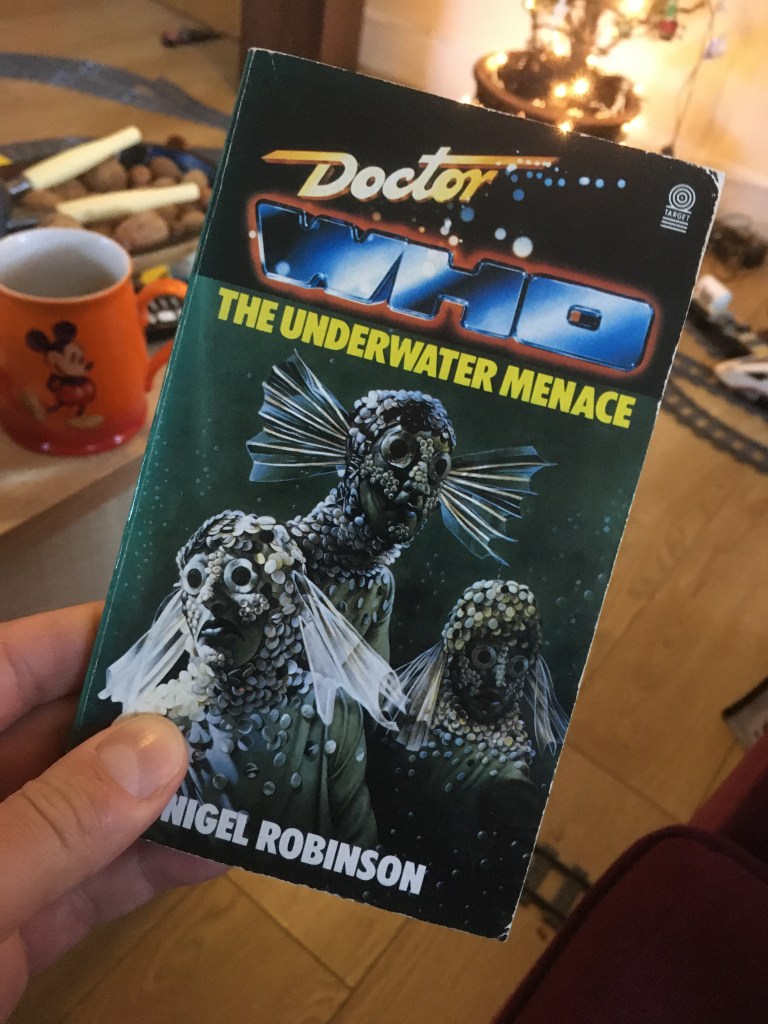
The Underwater Menace – one of a batch of Target novelisations I was bought for Christmas last year – was not one of these, because The Underwater Menace was a Doctor Who book owned by my school library. The only Doctor Who book owned by my school library. So although it might not have been my first Doctor Who book, it was one of the first Doctor Who books I read in the comfort of my own home (the first or second, in fact; the other was Doctor Who In An Exciting Adventure With The Daleks, the grey hardback of which my local library held – oh, those line drawings! The description of the endless TARDIS corridors! The glass Dalek!).

It must, however, have been after that life-changing experience of Doctor Who on television, because I remember this: when I read The Underwater Menace, I attempted to read it as a story featuring the Seventh Doctor and Ace. Quite how long I managed to keep this up for I don’t know; I think it might have been quite stressful, not so much imagining Sylvester McCoy’s Doctor in place of Patrick Troughton’s (not the hugest leap) but somehow turning 60s dolly bird Polly, who in this story is particularly (and uncharacteristically) pathetic, into baseball bat-wielding Ace.

Polly was the only candidate for this treatment: Ben made so little impact I had forgotten he was even in this story until I eventually saw in on video (and even then, he rather fades into the background, possibly because half of his lines have been hastily given to Frazer Hines). And there was no way I’d have tried to turn companion Jamie into Ace, because I was VERY happy to add Jamie to the Seventh Doctor’s crew.

I don’t know why Jamie made such an impact (and having reread this tome, I remain a little baffled). But he did. My pictures of the Seventh Doctor and Ace were immediately and anachronistically joined by the character of Jamie, my ideal TARDIS crew. Which was especially interesting because I had no idea what he had looked like on television. It didn’t matter: I could imagine, and The Underwater Menace put a clear idea of his appearance in my head.

He was a white-haired old man with a fluffy moustache in a kilt and a tam o’shanter.

On picking up this book after all these years, I was curious to see what could possibly account for this – was it possible that Nigel Robinson could be blamed for such a misconception? Well… yes and no. Certainly Jamie’s wide-eyed 18thcentury bewilderment, usually expressed in a colourful vernacular, has more than a little Private Frazer about it. I probably gave him a fluffy moustache because, even though in real life absolutely none of the old men I knew had a fluffy moustaches, in my imagination old men without exception had a fluffy moustache. I blame children’s television.

What I had failed to take note of was a single adjective in the book’s second sentence: ‘It was the only explanation the young Scottish piper could think of’. I picked up his nationality without mishap (I pictured him with a kilt, a detail that I’m pretty sure Nigel Robinson never bothers to fill in). I expect his musical ability didn’t pass unnoticed either (I pictured him with a tam o’shanter, the obligatory uniform of anyone who players the bagpipes – again, I blame children’s television). But thanks to my failure to pick up on his third characteristic, Jamie ended up an old man with a fluffy moustache, and by the time Robinson next mentioned his age the damage was presumably done, picturing-things-in-my-head-wise. This was an adventure featuring the Seventh Doctor, Ace, and an old man with a fluffy white moustache wearing a kilt and a tam o’shanter.

A jolly good adventure I thought it was, too. My subsequent drawings of my portmanteau TARDIS crew attest to that. Reading the book now, its appeal is obvious: it rattles along, Nigel Robinson sticking very much to the Terrance Dicks formula for Target novelisations, and there’s plenty of jeopardy along the way. In fact, it is rather more convincing as a book than it is on television, the idea of the underwater society with its ancient religion continuing uneasily alongside new technology pretty compellingly sold, and the sillier details (‘we turn people into fish so that they can bring us plankton!’) sensibly skirted over. Unfortunately, Robinson can’t skirt over the central plot point that the villain is a man who wants to blow up the world JUST BECAUSE. In a way it’s a pity he doesn’t resign himself more fully and have some fun with this; he’s knowing enough to use the quote ‘Nothing In The World Can Stop Me Now!’ as a chapter title, but I can’t help feeling that a more offbeat narrative approach, like those in the three sublime novelisations Donald Cotton wrote around the same time, would have sold this B-movie stuff rather more effectively.

Not that it bothered me at the time – it is only with adulthood that we fans decide that things like character motivation and scientific plausibility have some part to play in adventures as well as high jinks and derring-do – and even in the absence of those, there is something very modern about the template for this story. The Doctor, an agent of chaos, enters a situation and within 24 hours sparks a rebellion and overturns a regime. Take away the madman trying to blow up the world and you’ve basically got a Cartmel-era archetype right there. Actually, replace the madman with Kate O’Mara and I think we might have found a doppelganger.

So perhaps it wasn’t so inappropriate to try to squeeze the Seventh Doctor and Ace into this scenario after all. The perfect team to take on this kind of fodder, with the aid, lest we forget, of at least one young fan’s favourite moustachioed octogenarian Scotsman, Jamie.

James is occasionally writing reviews of Doctor Who related books on Goodreads, at a rate which should see him get about a quarter of the way through before the inevitable heat death of the universe.

After The Screaming Stops

People complaining that Bohemian Rhapsody is a sanitised, plodding account of stadium-level superstardom needn’t wait for an alternative trip to the cinema that has all of the guts and tension of the real thing: After The Screaming Stops is a no-holds-barred documentary following the fortune of late-80s chart toppers Bros. They may not seem the most obvious subject – the relatively brief period during which their star was in the ascendant has perhaps dimmed our collective memory of how brightly it shone. But directors Joe Pearlman and David Soutar have made a searingly brilliant film, a portrait of Matt and Luke Goss that manages to glance into the abyss of the music industry without losing its intimacy.

after-the-screaming-stops-keep-clear-02

Key to its success is the decision not to focus on the past, but the present. The brothers have independently led successful careers since making a financially ruinous fresh start in the early 90s – Matt has a residency at Las Vegas and Luke is a film actor and director in Los Angeles. The significance of their decision to leave the UK becomes more apparent throughout the film, which follows their journey back to their town of birth and a reunion to perform together for the first time in 28 years at the O2.

Also key to the film’s success is that it lets its subjects do the talking. Matt, a dapper figure with a penchant for bandanas and licking things, behaves in a way that leans towards self-parody, though we glimpse a far more fragile interior. Luke is the quieter of the two, thoughtful and deadpan, but again concealing a darker, brittler side to his personality. They make for an immensely entertaining double act, both intentionally and unintentionally funny, though to the film’s credit they are never treated as subjects for mockery. I predict that audiences will find them endearing company whether or not they had any previous interest in the brothers Goss. Mind you, the rapturous audiences at the 2018 BFI London Film Festival and the female hordes glimpsed in the film suggest that a fair number of people out there do have an interest – perhaps once a Brosette, you’re always a Brosette.

I wasn’t. (Were boys even allowed to be Brosettes?) I was a bit on the young side, and my loyalties were firmly committed to the church of Jason Donovan. But Bros represented something a little more grown-up than the manufactured pop of Stock, Aitken and Waterman; I was musically aware enough to recognise the virtuosity of Matt Goss’ vocals and to be impressed that they co-wrote their songs, and the subject matter seemed very adult (they sang about ‘issues’ – drugs! racism! materialism!), a stark contrast to the bouncy love songs of the Hit Factory.

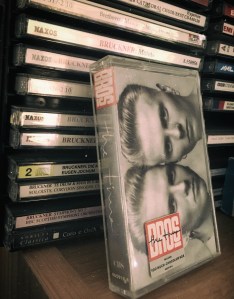
The two worlds collided in a blissful Christmas 1989 when Jason Donovan and Matt Goss dueted for a second and a half in Band Aid II (more thrilling to my ears than a hundred Bonos), and by lucky chance the shift in my musical tastes had come after my brother and I had made Christmas lists, so he ended up with a Kylie album that no longer looked so appealing next to my copy of The Time. In arty black and white printed onto slightly silver card, Matt and Luke shirtless and staring moodily from the cover, it was by any measure the sexiest cassette on my shelf. (Come to think of it, it probably still is.)

IMG_3353

I only recently discovered that the album was perceived as something of a failure at the time, hitting only number 4 in the charts and going merely gold after the four times platinum achieved by its predecessor. Apparently the critics were a bit sniffy about it too, which surprises me even now, because objectively it’s a more interesting, ambitious piece of work, from the structural and harmonic complexity of ‘Madly in Love’ to the edgier guitar-driven funk grooves on side B and the poignant balladry of ‘Sister’. The first single ‘Too Much’ is arguably the best pop single they made.

But ‘Chocolate Box’ (‘their best song so far’, said my friend Stephen, the biggest Bros fan in my class) only reached number 9 in the charts, and After the Screaming Stops touches on the field day the media had over that. ‘A few years earlier I’d have given anything to get to number 9,’ Matt Goss says, still baffled by the relentlessly negative treatment they received. And although the point is not hammered home, one of the things you come away with is a sense of just deep the wounds inflicted by the media can be.

Screen Shot 2018-11-09 at 15.11.04

The UK press hated Bros. Even at my tender age I was aware of some of the attempts to whip up scandal, the ‘Craig is gay’ rumours, and the tediously frequent ‘Bros split!’ headlines, as if newspapers thought that by printing it they could make it true. In a way, they succeeded. In an early 90s interview, Terry Wogan mentions that the press have been ‘trying to kill you stone dead for about a year and a half now,’ before gently adding ‘I don’t think they mean any harm to you, it makes headlines’. You can see in the brothers’ faces that they’re not convinced. And why would they be? The onslaught must have felt pretty personal to such young men and the relentless schedule and media circus had already taken its toll – although the film doesn’t touch on it, the band’s third member Craig Logan ended up in a wheelchair with Chronic Fatigue Syndrome, and in one heartbreaking sequence we see them wheeled onto television, broken smiles fixed on their faces, within a day of hearing that their sister had been killed in a car accident. Ultimately the pressure and the critical mauling would drive apart not only a band, but a family.

Screen Shot 2018-11-09 at 15.09.47

Why did the press hate them so much? It’s not clear. Perhaps as Wogan says, ‘it seems to be a very British thing that as soon as somebody really succeeds everybody attempts to kick the ground from under them and destroy them’. Or maybe the press felt like the neighbour looking out of the window at the endless rows of young girls hanging around outside the Goss’ London house desperate to catch a glimpse of their idols (‘They’re just sitting there like dummies!’) – and don’t the media hate feeling left out? Just out of curiosity, I glanced through a review of the sold out O2 reunion, and there it is again: the snark. The mockingly parroted tagline ‘the biggest reunion in pop history’. The sarcastic acknowledgement that Luke can ‘hit the right parts of his drum kit in the right order’. Perhaps some critics are simply intimidated by genuine charisma – because whatever you make of Matt and Luke Goss, there is plenty of that, onstage and off. Either way, when they talk about the press as if still processing a trauma, you begin to get a sense of what was casually inflicted all those years ago.

It becomes abundantly clear in After The Screaming Stops that these are just some of the wounds that have never had a chance to heal, and we are treated to some spectacular scenes of sparks flying in rehearsals. Some reviews have made shorthand references to Spinal Tap or the Gallagher brothers, but both comparisons do the film a disservice; having so carefully invited us into the respective worlds of Matt and Luke, the undeniably entertaining arguments turn on a knife edge; there is a point in the film when it becomes unclear whether you’re watching a bittersweet comedy or a slow motion car crash. It is a moving, even haunting journey, and by the time it finishes, it may surprise you just how much you’re invested in an 80s pop sensation making a successful comeback.

fantastic-fest-review-after-the-screaming-stop-is-a-hilarious-and-heartfelt-look-at-80s-pop-stars-bros-2

After The Screaming Stops is in cinemas from today and on DVD and digital release on 12th November. You can check out the screenings here and you absolutely ought to get to one if you possibly can. You’ll thank me, I promise.

Worth Rescuing: Never Let Me Down

In 2008, David Bowie released a new mix of ‘Time Will Crawl’ from his much-derided 1987 album Never Let Me Down. As much a rerecord as a remix, this version stripped the song of its 80s excesses, jettisoning the heavy reverb and electro-kit of the original and inserting an everso tasteful (and everso noughties) string quartet and a new drum track. ‘Oh, to redo the rest of that album,’ said Bowie. Problem is, the ‘MM remix’ not only fails to improve on the original, it sort of neuters it. Its original power is gone, along with some of its surprisingly artful changes of texture – I’ll swap the meandering string quartet for the original’s prominent piano and the third verse textural build-up any day, echoey drums and all.

Nevertheless, the album’s original producer Mario McNulty has taken Bowie at his word and a new version of the album is what we’re going to get. The appetisers dropped onto the internet so far have done little to alter my feeling that the project is destined to be no more than a worthy curio; on the new version of ‘Zeroes’ the light-entry-add-drums-later build is almost identical to the ‘Time Will Crawl’ remix and similarly diminishes the sense of grandeur. Bowie’s voice doesn’t just sound 30 years behind the rhythm section, but about twenty metres behind them as well, and ironically (since it is an attempt to rescue the song from overproduction) this layering of old and new elements eventually becomes incoherent. This is even more the case on Beat Of Your Drum, Bowie’s lonely vocal trapped behind a wall of arty strings that neither sits happily with the chugging middle aged rock texture reached at the chorus nor with the spirit of the song itself. And whatever the artistic merits of the new contributions, it doesn’t half sound contrived. Most tellingly, on the revamped ‘Zeroes’ Bowie sounds as if he is singing sharp throughout; there are technological reasons that would explain tuning discrepancies if tapes from 1987 haven’t been properly matched to 21st century machinery, but knowing that Bowie tended to lay down his vocal last and that he had a masterful knack for pitching his performance (in a literal sense) to match the context, my suspicion is that he sang on the sharp side to match the energy and pomposity of the late-80s production. Stuck against (or behind) a more restrained backing track, it sounds wrong.

This retrofitted Never Let Me Down is guilty of doing both too much and too little. For all of its anachronistic tinkering it leaves the track listing intact, as if production is the beginning and end of the album’s problems (it’s not) and as if every song on it is worth rescuing (I refuse to believe that even the presence of the great Laurie Anderson can make the execrable ‘Shining Star (Makin’ My Love)’ bearable). There are a whole load of issues to be addressed to reveal this album’s hidden qualities, and I hold the uncommon view that production isn’t really one of them – take it or leave it, the overblown quality of Never Let Me Down is the sound of 1987, and if we’re going to start meddling with that then why not also rerecord the rhythm section on Hunky Dory and Ziggy Stardust, both of which could do with beefing up a bit? In any case, the overproduction is less egregious than people remember, the content just needs presenting in a more flattering way.

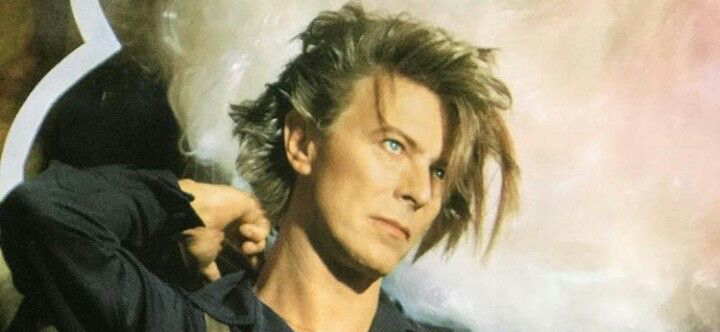
I had a go at fixing it myself a while back and the result completely transformed my experience; to my surprise (because like most people I never came close to loving this album), it has been on my metaphorical turntable regularly. So, whilst it’s never going to convert anyone for whom echoey programmed drums and 80s bombast are anathema, here’s a proposal for revisiting Never Let Me Down without it sounding as though it were recorded in two different centuries…
neverletmedown1

The Problem

Arsalan Mohammad’s excellent Album to Album podcast recently discussed the problematic ‘toploading’ of Let’s Dance, all Side A hits and Side B dross. That’s the 80s for you – stick the singles at the beginning, then filler all the way. Never Let Me Down certainly has the big hitters on Side A, while Side B begins with the half-baked ‘Glass Spider’ closely followed by the utterly crapulent ‘Shining Star (Makin’ My Love)’, but if you make it as far as the rest of the album it’s not all bad – the problem is that the three tracks that follow are pretty much exchangeable in tempo and tone, with near-identical intros and a relentless 120bpm beat (plus a weird tonic-dominant-tonic relationship which makes them feel even more part of the same breath). What Side B is desperately crying out for is variation.

So pacing and structure are all wrong, but the problem goes deeper than that. The album’s grappling with prostitution, war, the environment, war and, erm, girls, is often lazily assumed to be disparate and a bit laughable (there’s nothing more embarrassing than a middle aged rocker doing ‘issues’), but in fact the underlying themes of isolation and anxiety, under the inevitable shadow of nuclear oblivion, suggest something approaching a Concept (capital C). The spoken prologue to ‘Glass Spider’ is the giveaway: this is middle aged Bowie’s answer to Diamond Dogs, with the former’s dystopian future replaced by a dystopian present. Bowie’s 80s decline is rightly characterised as the moment he started following trends rather than leading them, but in Never Let Me Down we perhaps see an attempt to cut a slightly different path. A concept album could hardly have been less fashionable in 1987, and like Diamond Dogs it was designed with a grandiose, theatrical tour in mind (conceived as an arty, experimental venture, even if it was received as pretentious folly).

neverletmedown2

Any such ambitions were watered down by the millstone of EMI, for whom Bowie was supposed to be making lots of money, and who put the kibosh on his original plan to record short, uncompromising songs in a style that Iggy Pop was making his own. The era’s penchant for slow fade-outs kills any sense of continuity, and the conventional tracklisting puts the final nail into the coffin of any creative intentions.

Why Is It Worth Rescuing?

All of the above. Flawed ambition is better than no ambition, and after Bowie’s complete disengagement from Tonight and even his let-Nile-Rodgers-do-all-the-heavy-lifting approach to Let’s Dance, at last we have Bowie committing to a project. Rather than just turning up to sing, Bowie worked long, disciplined days during Never Let Me Down‘s three month recording period, writing and experimenting during the sessions as he had in his most fertile periods, and for the first time since Scary Monsters playing on some tracks as well. Yes, the lyrics leave a lot to be desired, veering from completely-on-the-nose to insipid (though just occasionally striking gold on the way). But for all that it’s not his greatest period of songwriting, the material was pouring out of him again – his previous album had been a couple of new songs padded out with covers and rehashed Iggy Pop, and almost half of Let’s Dance reworks existing material (with some pretty uninspired stuff in the remainder), but this time he ended up with material to spare.

neverletmedown4

You can hear it in his singing. It’s not clear at what point Bowie realised that the album had fallen short of his ideals (he certainly promoted it as if he believed in it, at least initially), but he belts the songs with full-throated brilliance, giving the kind of vocal tour de force that we hear on ‘Heroes’ and Lodger, whether it’s the wild falsetto in ‘Day-In Day-Out’, his cod-Lennon ‘Never Let Me Down’ or his biggest, Basseyest croon on ‘Beat Of Your Drum’. Miraculously, the nuance and energy of his performance manages to cut through the excesses of the production – for this alone, the album deserves a second chance.

Replacement Tracks

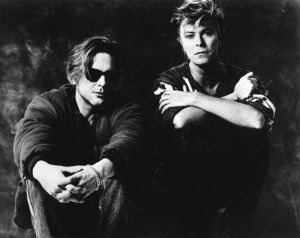
Quite why Bowie was so enthusiastic about ‘Shining Star (Makin’ My Love)’, apparently one of the first tracks he insisted should be a definite, is hard to tell – perhaps it has something to do with his brief infatuation with Mickey Rourke. Whatever the reason, I’ll be happy if I never hear it again, and it will have no place on any version I’m putting together.
neverletmedown3

Thankfully, Bowie’s newly regained enthusiasm for recording left plenty of bonus material with which to give more shape and variation to the album as a whole. I’ve cheated slightly and included ‘When The Wind Blows’, which may not come from the same sessions but was probably recorded while the Never Let Me Down demos were being laid down, and it certainly fits thematically (he was recording it when he heard about the Chernobyl disaster, which inspired ‘Time Will Crawl’). The presence of Erdal Kizilcay and the heavy guitar lick in the introduction mean that it happily slips into the Never Let Me Down sound world, and one his best melodies from the period, coupled with a vocal that moves from tender to icy in a single sweep, adds some much-needed lyricism.

We also find a more delicate sound in his version of ‘Girls’, a song written for Tina Turner but which works rather better in his hands – hardly surprising, given the Jacques Brel pastiche it clearly is. Bowie half-croons, half-croaks the song before growing to full Scott Walker intensity at the chorus – it’s hardly ‘My Death’, but there is some real magic in the first verse, subtly scored with piano to the fore (Philippe Saisse almost channelling Mike Garson in his chromatic embellishments). It kind of loses its way after that, the sombre chanson vibe giving way to guitar and dirty sax, but the single edit it doesn’t outstay its welcome and again we have a distinct new colour to break up the album.

neverletmedown5

Then there’s ‘Julie’, a song that begins with an understated, countryish verse, then breaks into a heartfelt and rather gorgeous chorus. Perhaps its slightly sixties vibe is what saw it relegated to the B-side of ‘Day-In Day-Out’, but by leaving it off the album Bowie denied us arguably the most beautiful thing to come out of the sessions. Definitely worthy of a place.

Finally, and surprisingly, I’m including ‘Too Dizzy’, though it’s a difficult one to get hold of. ‘I never want to hear that fucking song again as long as I live!’ said Bowie, and he did a pretty good job of erasing it from history, deleting it from every reissue of the album. For years I wondered what horrors the track might conceal, imagining it sitting a couple of songs after ‘Shining Star (Makin’ My Love)’ and being the one that Bowie was embarrassed about! What a surprise, then, to finally hear it and find it guilty only of enjoying itself a little too much. Is the lyric misogynistic? A little, but it’s got nothing to rival ‘China Girl’ for jaw-dropping awkwardness (both lyrically and musically, that is, as well as in the video and Bowie’s live performance toe-curling Chinese accent). I hear the argument that the track is a camp mess, and I’m ignoring it, because if there’s one thing this album badly needs it’s a sense of humour.

Track Listing

There’s no question as to how this album ought to open: ‘Glass Spider’ is barely a song in its own right (it’s little more than a repeated refrain), but with its dramatic monologue it makes sense as a prelude. It’s a shame the twinkly synthesiser that kicks it off (or fails to) is so insipid – it needs something like the saxophone shriek that heralds in Diamond Dogs – and for want of anything better, I’ve given it a bit more ceremony by splicing in the cello hits from the beginning of the instrumental version of ‘When The Wind Blows’, along with some of the electronic screams from the opening of ‘Zeroes’ (another callback to Diamond Dogs). It’s not brilliant, but I think it’s better – and it creates a deeper sense of continuity with what follows.

Spacing out the stand-out tracks (which, to my mind, are ‘Time Will Crawl’, ‘Beat Of Your Drum’, ‘Zeroes’ and my additions of ‘When The Wind Blows’ and ‘Julie’) and giving the order of the tracks a little more light and shade, this is what I ended up with:

  1. Glass Spider
  2. Beat Of Your Drum
  3. Day-In Day-Out
  4. Time Will Crawl
  5. Girls
  6. ’87 and Cry
  1. When The Wind Blows
  2. Zeroes
  3. Never Let Me Down
  4. Too Dizzy
  5. Julie
  6. New York’s In Love
  7. Bang Bang

There’s a hypothetical Side A and Side B there, though neither would fit on an LP because, as you’ll see, I’ve added much more than I’ve taken out. That’s partly a lack of discipline (I am a bit of a completist and tend to feel that more is more) – a neater version would leave out ‘’87 and Cry’, ‘Too Dizzy’ and ‘New York’s In Love’ – but hearing them in this context I didn’t feel them to be either superfluous or objectionable, and repeated listenings haven’t changed my view.

Cover Art

One thing we can all agree on is that the cover design for Never Let Me Down is an absolute car crash, horribly of its time and a headache to even glance at. Coincidentally, when I searched for alternatives to grace my iTunes catalogue I plumped for a very similar image to the one the Parlophone’s new version is using, one of Greg Gorman’s outtakes from the same photo session. But where the official version has really fouled up is in keeping the shoddy and frankly ghastly cut-and-paste ‘David Bowie’ logo – given the extent to which they’re trying to erase the 80s from the music itself, you’d have thought they’d find a different font. I settled for the logo Paul Belford contributed to the V&A Changing Faces Of Bowie print; the simplicity of the design and vaudevillian style of the photograph have a kind of timeless feel which, if it doesn’t match the sound of the album, at least doesn’t contradict it.

David-Bowie-Never Let Me Down alt

The Result

My copy of the EMI reissue of Never Let Me Down has sat virtually as new in my CD collection for years, mainly fulfilling its role of ensuring there’s no gap in the chronology of the spines. Whereas my ‘special edition’, as I said, continues to enjoy repeated listenings.

I’m not saying it’ll work for everyone, but I didn’t make it for everyone, did I?

And they can keep their ‘past is a foreign country’ puns, too…

‘Musicals continue to be the only art form, popular or otherwise, that is publically criticized by illiterates’, wrote Sondheim in Finishing the Hat, by which he meant illiteracy about musical theatre itself. We got to see a little bit of that with the press night of The Go-Between, the most exciting new musical I have seen for years. (In brief: the music is astonishing and has the vocabulary to navigate the psychological nuances of the story, as does a production that plays to every strength of its theatricality, its ensemble cast operating like a beautiful piece of clockwork and accompanied throughout by a single onstage piano which, thanks to the writing and the performance, weaves every colour the score needs whilst retaining an intimacy and intensity that is at the heart of the whole concept. I sat through both acts in what felt like a single breath and it has continued to haunt me since. Go and see it. And take me with you please.)

thegobetween

Not that I was so naïve as to anticipate that response being reflected in the show’s reviews, and even as I staggered out of the theatre trying not to make a fool of myself by weeping too openly on Shaftesbury Avenue I did wonder how far such subtle craftsmanship would go with a critical community more used to seeing (not to mention working in) broad brushstrokes.

Illiterates? Perhaps. It’s hard not to feel empathy with Sondheim when critics of musical theatre have so little belief in the genre: according to The Londonist ‘musical just isn’t the right genre for intense, psychological narrative’, an idea echoed by the opinion in WhatsOnStage that ‘secrets and subtext would be easier if the cast could talk to each other’ – whilst, reducing this to a special kind of stupid, Official Theatre simply has it that this musical contains ‘too much singing’. In The Times we get ‘this is not so much a musical as a play set to music’, which may be the single silliest sentence I have seen in a theatre review, partly because it implies the absence of a librettist and partly because it ignores the development of the function of musical theatre since about 1943.

But perhaps this is not illiteracy so much as inexperience; all of the above demonstrate a profound underestimation of the genre of musical theatre, even resulting in a need to redefine this piece altogether. On BBC Radio 4’s Front Row, Matt Wolf went the whole hog and called it a chamber opera, though his erudite stance was scuppered by host John Wilson explaining that there were no stand out songs and the whole thing was ‘pointless’ because ‘if you love the book, and the film was fantastic, why take it to the musical stage?’ On those grounds we should give some serious re-evaluation to the likes of such pointless musicals as Oliver!, The Phantom of the Opera and Les Miserables, for which there are also perfectly good literary substitutes, not to mention the recent glut of musicals adapted directly from films which are already fantastic.

‘Ah’, John Wilson might respond, ‘but those musicals do have stand-out songs’. His assumption – not an uncommon one – is that the stand-out songs are the point of musicals. Many commercial producers clearly think along those lines with their increasingly desperate attempts to turn some back catalogue into another Mamma Mia, almost as if musical theatre hasn’t moved on since its formative years as a mere glorified revue. But even if that were the case, The Go-Between had been described moments earlier as a chamber opera, and you don’t hear people complaining that The Turn of the Screw is pointless because it doesn’t have stand-out songs and you can read the book.

(Incidentally, both The Turn of the Screw and The Go-Between do have stand-out songs, they’re just rather less heavy-handedly deployed than in, say, We Will Rock You, not least because the composers place storytelling above the audience’s need to clap every few minutes.)

It’s important to point out that not all critics are illiterates, and there have been brilliant and perceptive responses from the likes of Mark Shenton, Edward Seckerson and Libby Purves (perhaps it’s no coincidence that they are largely positive), not to mention from audiences themselves. When I saw the show the now-obligatory standing ovation was genuinely enthusiastic and the audience members who sat in their seats still sobbing as the house lights went up didn’t seem to have had their experience diminished by the shortage of ‘numbers’. It is reassuring that, in spite of the expectations of some critics, music and storytelling are all that’s needed to get that kind of response from West End audiences.

So for all that it has been labelled ‘gentle’, ‘mild-mannered’ and ‘austere’ (it is none of those things, but some critical pulses are evidently conditioned only to respond to heavy synthesisers), The Go-Between lays down a hefty gauntlet. By demonstrating that musical theatre can be sophisticated, even challenging, and still shift seats, it challenges producers to look for ticket sales in quality, not another back catalogue. That way lies a future for the British musical.

Doing things in a more civilised way

So this Labour spat over the decriminalisation (or not) of prostitution: it is tempting, as always, to sigh and say ‘Jeremy Corbyn really doesn’t help himself, does he?’. In this case, though, I’m not sure it’s that way round. After all, he is within his rights to give a personal opinion in response to a question from a member of the public, especially one consistent with his support for Amnesty International’s position on prostitution. (Whether he elaborated on it is unclear, because predictably the press have only reported The Controversial Thing What He Said, but nobody could accuse Amnesty’s stance of being poorly considered.)

As the press gleefully reported, he was immediately attacked by ‘angry female MPs’, every reporter conveniently ignoring all criticism from male MPs to portray this as a straightforward battle of the sexes. Mind you, it wasn’t the media that made it about gender in the first place, was it?

2016-03-06 03.31.59 pm

Enter Jess Phillips, hashtag shedding a tear because Corbyn is a man who ‘says we should decriminalize a known violence against women’. This introduction of gender politics is deeply unhelpful. Even if we accept the genderisation of the discussion itself on the basis that most of the victims of prostitution are women, Corbyn’s gender is irrelevant – it is entirely conceivable that a man (especially this man) can advocate for women’s rights, and in any case the Amnesty view is championed by women and women’s groups alike. To portray Corbyn as a chauvinist with no respect for women’s dignity is pretty low and more than a little disingenuous.

Equally disingenuous, or just plain ignorant, is reacting as though Corbyn doesn’t care about violence against women, portraying him as a champion of the sex trade and confusing decriminalisation with legalisation. The Women’s Equality Party have even put out a statement which insinuates that Corbyn was ‘advocating the sale of bodies for sex’, a hugely reductive leap of non-logic.

The sad thing is that these angry Labour MPs don’t recognise that, on this, they are genuinely all on the same side. Corbyn has aligned himself with a proposal grounded in a desire to protect the vulnerable, and whilst they disagree over the proposed solution, they might at least give Corbyn the credit for raising the discussion and engage in a more sensitive, sophisticated way.

(Oh, and the shadow cabinet member who said Corbyn should ‘go and join the Green party’ can piss right off: this debate is not served by you attaching your political prejudices to it, and since you’re the one taking them anonymously to a right wing newspaper, consider that perhaps you’re the one in the wrong party.)

2016-03-06 03.33.40 pm

Prostitution is an emotive issue, but for that very reason politicians must be wary of letting their emotions cloud their ability to reach objective conclusions, particularly in the absence of a party line. Nobody doubts Harriet Harman’s commitment to women’s rights, but her conflation of abuse with her distaste for prostitution confuses the issue; Corbyn shares her desire to protect women, so her objection to his description of prostitution as ‘an industry’ seems a bit petty when you consider that industry and exploitation are hardly mutually exclusive. Fine, we can stop calling it an industry if you like, but that won’t stop it being one a dictionary definition sense, and it won’t solve any problems.

And whilst it is a legitimate point of view to consider all prostitution exploitative and degrading, however consensual, that is a different discussion. An important discussion, but a more broadly ideological one with opinions (indeed, feminist opinions) on both sides. It would be disastrous to confuse that debate, with all its grey areas, with the clear cut need for legislation that protects the victims of categorical abuse such as coercion, sex trafficking and child prostitution; the so-called Nordic model (decriminalisation of the sellers and criminalisation of the buyer) is an attractive solution to those who are morally opposed to prostitution full stop, but it may not be the solution that best helps the vulnerable (in fact, the Amnesty proposal is supported by 60% of organisations working with sex workers, of which, conversely, only 4% support the Nordic model).

None of which is to say whether Corbyn is right or wrong, it is simply to ask, can you just sit down and talk about this, please? I mean, talk to each other rather than to the Telegraph or the whole of twitter? If you really care about these vulnerable women, men and children, then instead of spoiling for the fight that the media have predictably turned into the main story, acknowledge that you are unified in your beliefs that the current law doesn’t work, that criminalising victims doesn’t help and that you want to do something about it?

You do want to do something about it, right?

You Stupid Boy.

sunfrontpage

‘Um, hey. About this headline.’

‘Brilliant, isn’t it!’

‘Well… is it?’

‘Yeah, ’cos it’s like history repeating itself, us against Europe, like in the Second World War!’

‘Well, no, in the Second World War we were trying to save Europe from Nazi occupation.’

‘That’s exactly my point! ’Cos David Cameron, right, is so rubbish at doing it, he’s like in Dad’s Army where they just let the Nazis invade!’

‘I don’t think the Nazis ever did invade, did they? Even in Dad’s Army?’

‘Sure, but they would’ve done if Cameron had been in charge.’

‘Okay. Okay, let’s accept the analogy for the time being. Only… I can’t help noticing you’ve put Cameron’s name where it was originally, er, ‘Hitler’.’

‘Wrong number of syllables, you mean? I was worried about that too. But actually you can make the scansion work, you just have to use semiquavers.’

‘No, no, it’s not that, it’s… in your analogy, I thought Cameron was fighting the Nazis?’

‘Yep. Well, he is, isn’t he?’

‘But Hitler was a Nazi.’

‘Oh. I see your point.’ (pause) ‘I know, let’s put in a picture of David Cameron dressed as Captain Mainwaring, that ought to make it clear!’

Several hours of photoshopping later…

‘Yeah. Yeah, I see your point… he does look a bit like Heinrich Himmler.’ (pause) ‘Never mind, let’s put in a caption explaining who he’s dressed as, that ought to make the whole thing totally clear!’