Look Who’s Driving on The Collection: Season 20 (Blu-ray)
This feature has no right to be as entertaining as it is: in short, Janet Fielding, Sarah Sutton and Peter Davison drive from Ramsgate to a convention in Kassel, taking in various European locations along the route. It sounds like the kind of lightweight filler that wouldn’t be out of place on daytime television, and there are moments when that’s what we get – scenic aerial panoramas accompanied by jaunty stock music give us a glimpse of the feature that the production team perhaps thought they were making.
But as soon as the early 80s TARDIS crew get into a car together, something a little bit magical happens. We have already seen the easy banter between them in the Behind The Sofa Blu-ray features, in which Fielding entertainingly butts heads with Davison in what has become a trademark display of snark and grump (I have commented before that I would happily see a feature in which Janet Fielding provides a commentary on everything from now on – not just Doctor Who, *everything*); but somehow, with the need to talk about Doctor Who removed, the repartee moves up a gear and the result almost achieves an arthouse level of absurdity. It is also genuinely, tear-inducingly funny.
There must have been a point where the team making the feature realised what they had. Perhaps it wasn’t even until they started editing. But at some point it stops being a film about three people driving to Europe and becomes a film about three people being filmed driving to Europe; the whole piece is as self-aware as the three travellers staring at a row of cameras following their journey, and it is much the richer for it, because acknowledging the nature of the project removes any sense of artifice – there’s no pretence that we’re spying on three people journeying in private, they know full well that we’re watching them because they’re being followed by a crew in a van and a drone. So whilst the picturesque stop-offs are perfectly diverting, the focus becomes their conversation in the car, which, thanks to the amount of time they have known each other, the length of the journey and the acknowledged absurdity of the situation, sparkles with the kind of eloquent spontaneity that many loftier endeavours have aspired to and failed to capture.
Fielding ruminates on the deceptive nature of cows and does her vocal exercises, to Davison’s consternation. Sutton misunderstands an instruction to ‘drive slowly’ and they spend about ten minutes trying to understand directions, talking and shouting over each other as if the scene has been orchestrated by Robert Altman. They are entertainingly rude to each other, but their mutual fondness is also evident throughout, so the exchanges are caustic without being abrasive, charming without being twee.
By the end of the feature it feels a little like you have spent two days on the road with them yourself, but honestly I could have spent twice as long in their company and not grown tired of it. The only whiff of regret it left me with is the thought of how much more entertaining those TARDIS scenes in the 80s would have been if they’d given us something more along these lines.
In Conversation: Sophie Aldredon The Collection: Season 26 (Blu-ray)
Even the earliest special features on Doctor Who DVDs had pretty decent production values and ambitious intentions, but the range has kept on pushing what can be done within the limitations of a tiny budget, and the documentaries of recent years are really spectacular achievements; in the age of GB News the term ‘broadcast standard’ has lost all meaning, but what we’re getting on the Blu-rays rivals BBC content for slickness. It would be tempting to think there wasn’t much more you could do for the range.
Thankfully, somebody had the bright idea to go back to basics and give us a new series of features that rely not on snazzy green screen, drone shots and snappy editing, but simply on an incisive, well-informed interviewer sitting with somebody integral to the show’s history for an hour. And you don’t get much more incisive or well informed than Matthew Sweet. Combining the rigour of a historian with the affection of a fan, his interviews have wielded brilliant new insights from Doctors, companions, producers and writers; he goes into these interviews clearly having done his homework and keen to chart previously unchartered territory, but the answers he gets are gently nudged out of his subjects, coaxed from them with boyish enthusiasm and subtle prompts. I don’t quite know how Matthew Sweet does it, but if there was a formula to being Matthew Sweet then we’d all be Matthew Sweet and that wouldn’t do at all. Like Michael Parkinson, his skill lies in saying very little and letting his guests do most of the talking.
His interview with Michael Grade on The Collection: Season 22 is perhaps the boldest mission statement to date – to take a person who has long been considered by fans (dismissed by them, even) as a villainous bureaucrat and, brilliantly, to get his take on a vital era of the show (a new perspective on ground already admirably covered, as previously discussed). Grade’s insights are fascinating (if not always persuasive), and it’s probably just as well that even as he refuses to accept that it wasn’t actually him that cancelled Doctor Who, Sweet is too much of a professional to shake him by the lapels1.
For me, however, the real litmus test was Sophie Aldred. Purely as a consequence of her willingness and devotion to the legacy of Who, Aldred is surely one of the most-interviewed-living-Doctor-Who-people-evs. Certainly for those of us who endured the ‘wilderness years’ (when we were absolutely surrounded by Doctor Who in every medium except actually on the television), Aldred was a constant and reassuring presence, always happy to indulge fans, reminisce, deliver an anecdote. So it’s not out of any lack of love for her that I did wonder if she had any stories left to tell.
The answer is, of course she does, and Matthew Sweet finds an entry point in the brilliant simplicity of asking what her first day of work was like. Aldred casts her mind back, and we’re away; from a vivid recollection of seeing her face in close-up multiplied across a bank of monitors we move backwards to the audition, then Aldred’s work as a freelance actress before Who, and we’re on a twisty, always-engaging journey through the eyes of one of Doctor Who’s most generous personalities.
For all that he lets Aldred tell her story without getting in the way (something that is far harder to do than he makes it look), Matthew Sweet’s presence is also part of the magic. Yes, he has the credibility and expertise of a respected historian, but he also has the confidence to wear his fan colours unapologetically, engagingly representing us viewers: a fan, an enthusiast, a devotee (indeed, he admits in this interview that he was one of the young fans present at Aldred’s first public appearance at a Doctor Who convention, so his personal angle follows the same timeline as Aldred’s involvement with the show). It’s a quality he brings to each of his interviews, regardless of the era of the show under discussion, and every time he uncovers gold. It goes without saying that his interviews with the Doctors are indispensable, but really it’s impossible to single out any of these features (that said, if forced to choose, I’d urge anyone to check out his interview with Nicola Bryant for the mesmerising and occasionally horrifying picture it paints of what-things-used-to-be-like-working-on-the-telly).
The results are pretty much the hallmark feature of The Collection; if you get the Blu-rays for one thing other than the best version of the stories themselves, then it’s these.
Michael Grade was actually back with Matthew Sweet on the radio only this weekend, giving his ha’p’orth for a lovely programme about The Wilderness Years, and in a brief clip actually saying more than he does on the In Conversation interview with the frankly extraordinary admission that he told John Nathan Turner ‘I don’t like sci fi personally’. He was the Controller of BBC One, for crying out loud – would he have reshaped the channel accordingly if he didn’t like sport, or news? But at least Ben Aaronovitch can now consider his opinion thoroughly vindicated. ↩︎
Actor and comedian Toby Hadoke has become something of a Doctor Who equivalent to a national treasure; for all that he enjoys a more-than-respectable career in both of the aforementioned fields, since outing himself as a fan in his one-man show Moths Ate My Doctor Who Scarf his name has cropped up in all kinds of Doctor Who-related media, whether in his acting roles on Big Finish audios, his comedy, his presenting work, his excellent series of podcasts, his contributions to the DVD and Blu-ray range as a presenter and commentary moderator, and indeed providing a guide to surviving Doctor Who this very week on BBC Radio 4 Extra.
His first DVD extra was a perfectly entertaining, if slightly frivolous, documentary about robots in which Hadoke more than demonstrated his ease in front of the camera. But it’s Looking for Peter(on The Sensorites DVD) that first properly exploited his particular fascination, a genuine interest in the people involved in making television (whether they be actors, writers or assistant floor managers), which, combined with a personable style and gentle honesty when speaking with and about the figures he is investigating, has given us privileged insights into a growing number of lives that might otherwise have been forgotten.
Looking for Peter starts with a simple enough concept: in the absence of any information beyond a name and a couple of contradictory sets of dates, is there anything at all that can be discovered about Peter R. Newman, the writer of an early story that is unloved almost to the point of being unnoticed? You get the impression that nobody had particularly high expectations of the enterprise: Hadoke jokes that he might at least discover what the ‘R’ stands for, and a bit of digging around for a death certificate feels like a literal dead end.
Also, how interested was anyone else in discovering more about Peter R. Newman? It wasn’t exactly keeping me awake at night. And this is where Hadoke has a knack of pulling something a little bit miraculous out of the bag, because he’s so authentic in his curiosity to discover more that he takes us with him – and thanks to some input from researcher extraordinaire Richard Bignell, he uncovers a surprising amount, manages to speak with relatives, discovers pictures and even a recording. It’s a fascinating and ultimately rather moving journey that does exactly what Hadoke expertly did in his series of Who’s Round podcasts and continues to do in obituaries: takes a name from a list of credits and fully fleshes out the person behind them. Would that we all had a Toby Hadoke to ensure that we would be remembered so completely and compassionately.
He has, of course, built on this early documentary, and a Hadoke special feature is always one of my first ports of call on any release. Whose Doctor Who Revisited is a favourite of mine and perhaps goes the furthest in unearthing Stories About People; his Weekend With Waterhouse and Living With Levene features capitalise again on his genuine interest in, and knowledge about, the people involved in the programme, giving us a really insightful look at two characters who one suspects not many people would be able to get this much out of. It is a little too easy to take for granted the care that has been taken to make sure that the personalities behind Doctor Who are being so thoroughly interviewed and remembered; that the results are presented so warmly and engagingly is the icing on the cake.
If you’re not already subscribed to Toby Hadoke’s trilogy of podcasts Toby Hadoke’s Time Travels… well, what on earth are you doing with your life?! In Happy Times and Places he provides an informed and positive commentary on Doctor Who episodes, in Too Much Information he is giving about as comprehensive a history of the series as you could hope for in podcast form (including more rare insights into the key figures behind the show) and best of all Indefinable Magic is a series of musings on the nature of Doctor Who, fandom and all kinds of associated topics: thoughtful, informative, engaging, amusing and poignant. Essential listening; you can also support these endeavours at Patreon.
Given the ubiquity of producer John Nathan-Turner with Doctor Who throughout the 80s, his absence from the DVD range due to his untimely death in 2002 gave their behind-the-scenes features an immediately different feel. In the 80s and 90s JNT was visible in a way that other BBC production personnel just weren’t in those days, setting the template for the chatty showrunners of NuWho and becoming almost as familiar a face as some of the people working in front of the cameras (even, some have (not always charitably) argued, casting the Doctor in his own image). It was an association that continued well after the show’s cancellation, whether he was popping up for documentaries, BSB Doctor Who weekends, the fan convention scene or in the pages of Doctor Who Magazine (who commissioned his memoirs) – and he was a pioneering figure behind the scenes of Doctor Who in home media1.
It’s a pity that he never lived for long enough to see how the Doctor Who DVD range ran with what he had started and, apart from a single interview for the Resurrection of the Daleks release, never got to contribute to it. Instead, the range gave us a chance to hear from what were once less familiar voices from the era – notably script editors Christopher H. Bidmead and Eric Saward, along with writers, directors, designers – all welcome contributors, of course, and they have given us some genuinely fresh takes, but to those of us who grew up with his familiar face never far from a Doctor Who documentary, John Nathan-Turner absence left a pretty sizeable gap2. There is, of course, a great deal of archive footage of John Nathan-Turner discussing the show, always a welcome addition to features, but unlike him, those other voices have been able to record their thoughts from the vantage point of having seen a reinvigorated Doctor Who back on the television and vindicating an awful lot of the decisions that were made in the 80s. Aside from being denied the opportunity to say a big fat ‘I told you so,’ he has been deprived of the chance to talk about his Doctor Who with the optimism of knowing that he wasn’t ‘the man who killed Doctor Who’ but was actually ahead of his time in a great many ways. He was also denied the chance to see his contribution reassessed by a great many fans and given the credit he deserves for keeping the programme alive for as long as he did.
In the light of that, a proper retrospective of his life and work was definitely due, and Chris Chapman’s documentary Showman: The Life of John Nathan-Turner (on The Collection: Season 26 Blu-ray) more than measures up to the task. The DVD range has given us many fine tributes to those who have passed on, including the lovely Jacqueline Hill – A Life in Pictures, Roger Delgado – The Master, and Chapman’s own celebration of William Hartnell through the eyes of Jessica Carney in My Grandfather the Doctor. But Showman is in a different league; the running time alone is a statement of intent, giving the man the feature-length documentary warranted by such a fascinating and important figure. It means there is time to really delve into the detail; his education and early career gets a proper discussion with the insights of people who knew him, and his pre-Who career is rightly given plenty of time as well, supported by an excellent selection of clips and photographs.
Naturally there’s plenty of footage to accompany the Doctor Who years, including associated activities like the pantomimes he populated with his leading cast members. Given the medium it is wise that we don’t delve into the realms of controversy already covered by Richard Marson’s biography, but the documentary is not afraid of confronting JNT’s flaws, confident that his qualities will shine through in the reminiscences of those who knew and loved him. The frustration of the post-Who years is fully explored, and by the time we get to the footage of an ill-looking JNT answering questions for his only DVD interview it is a genuinely poignant sight – a man who achieved a huge amount early on but found himself trapped by his success and unable to build on what he had done. It makes for sometimes sad viewing, but whilst allowance is made for regret and even anger, overall it focuses on celebrating a man who absolutely deserves to be celebrated. When it was released, Chris Chapman said he thought it was the best documentary they had made to date; whilst the Blu-ray features since continue to raise the bar, this one still has the edge on them thanks to compelling storytelling, an unsentimental tone and a fascinating, complex central figure – one who I would challenge you not to love even a little bit yourself by the time the credits roll.
They may feel a little perfunctory (even lazy) compared to what we have now, but the ‘years’ video range he produced was the first chance many fans got to see precious archive material and incomplete stories, he oversaw the release of soundtracks from missing episodes and he was the first of many people to offer a (sort of) completed version of Shada. My view of 60s Who was shaped by these products – how many of us watched Daleks: The Early Years over and over again for its invaluable glimpses of Skaro’s finest at their legendary best? ↩︎
This was particularly the case when he was not able to respond to a few of the less flattering portrayals he was subjected to. Saward’s antipathy towards John Nathan-Turner is famous, and there are moments where it felt as though he’d been given the last word. ↩︎
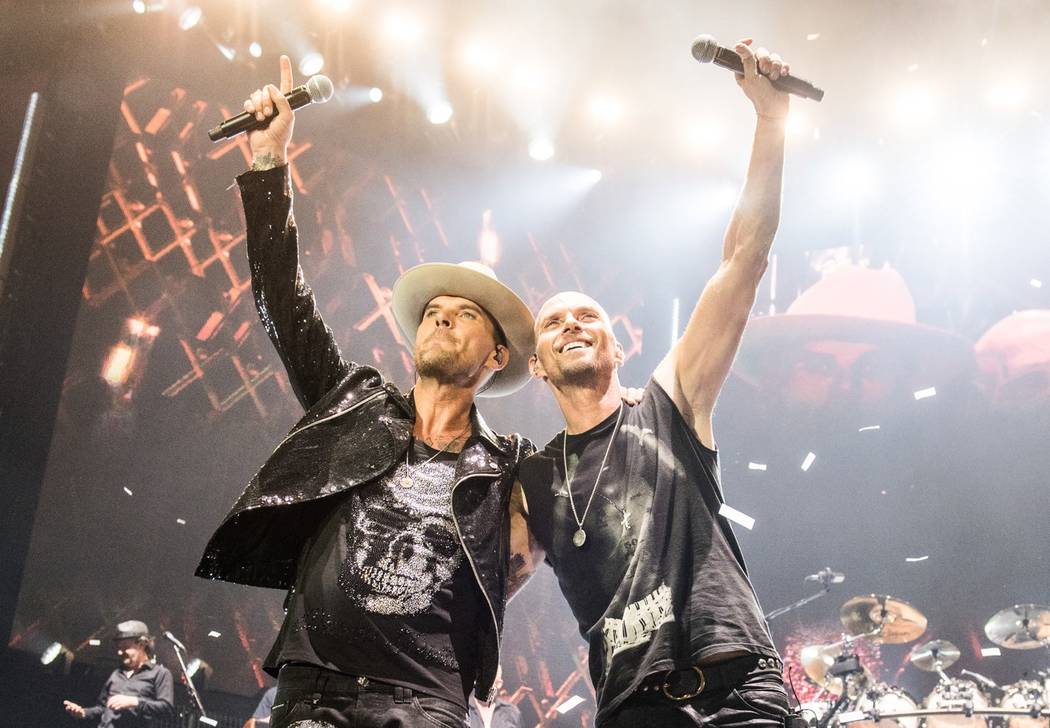
People complaining that Bohemian Rhapsody is a sanitised, plodding account of stadium-level superstardom needn’t wait for an alternative trip to the cinema that has all of the guts and tension of the real thing: After The Screaming Stops is a no-holds-barred documentary following the fortune of late-80s chart toppers Bros. They may not seem the most obvious subject – the relatively brief period during which their star was in the ascendant has perhaps dimmed our collective memory of how brightly it shone. But directors Joe Pearlman and David Soutar have made a searingly brilliant film, a portrait of Matt and Luke Goss that manages to glance into the abyss of the music industry without losing its intimacy.
Key to its success is the decision not to focus on the past, but the present. The brothers have independently led successful careers since making a financially ruinous fresh start in the early 90s – Matt has a residency at Las Vegas and Luke is a film actor and director in Los Angeles. The significance of their decision to leave the UK becomes more apparent throughout the film, which follows their journey back to their town of birth and a reunion to perform together for the first time in 28 years at the O2.
Also key to the film’s success is that it lets its subjects do the talking. Matt, a dapper figure with a penchant for bandanas and licking things, behaves in a way that leans towards self-parody, though we glimpse a far more fragile interior. Luke is the quieter of the two, thoughtful and deadpan, but again concealing a darker, brittler side to his personality. They make for an immensely entertaining double act, both intentionally and unintentionally funny, though to the film’s credit they are never treated as subjects for mockery. I predict that audiences will find them endearing company whether or not they had any previous interest in the brothers Goss. Mind you, the rapturous audiences at the 2018 BFI London Film Festival and the female hordes glimpsed in the film suggest that a fair number of people out there do have an interest – perhaps once a Brosette, you’re always a Brosette.
I wasn’t. (Were boys even allowed to be Brosettes?) I was a bit on the young side, and my loyalties were firmly committed to the church of Jason Donovan. But Bros represented something a little more grown-up than the manufactured pop of Stock, Aitken and Waterman; I was musically aware enough to recognise the virtuosity of Matt Goss’ vocals and to be impressed that they co-wrote their songs, and the subject matter seemed very adult (they sang about ‘issues’ – drugs! racism! materialism!), a stark contrast to the bouncy love songs of the Hit Factory.
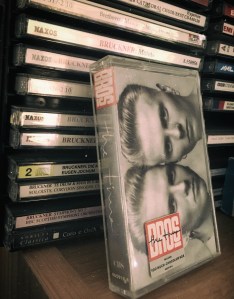
The two worlds collided in a blissful Christmas 1989 when Jason Donovan and Matt Goss dueted for a second and a half in Band Aid II (more thrilling to my ears than a hundred Bonos), and by lucky chance the shift in my musical tastes had come after my brother and I had made Christmas lists, so he ended up with a Kylie album that no longer looked so appealing next to my copy of The Time. In arty black and white printed onto slightly silver card, Matt and Luke shirtless and staring moodily from the cover, it was by any measure the sexiest cassette on my shelf. (Come to think of it, it probably still is.)
I only recently discovered that the album was perceived as something of a failure at the time, hitting only number 4 in the charts and going merely gold after the four times platinum achieved by its predecessor. Apparently the critics were a bit sniffy about it too, which surprises me even now, because objectively it’s a more interesting, ambitious piece of work, from the structural and harmonic complexity of ‘Madly in Love’ to the edgier guitar-driven funk grooves on side B and the poignant balladry of ‘Sister’. The first single ‘Too Much’ is arguably the best pop single they made.
But ‘Chocolate Box’ (‘their best song so far’, said my friend Stephen, the biggest Bros fan in my class) only reached number 9 in the charts, and After the Screaming Stops touches on the field day the media had over that. ‘A few years earlier I’d have given anything to get to number 9,’ Matt Goss says, still baffled by the relentlessly negative treatment they received. And although the point is not hammered home, one of the things you come away with is a sense of just deep the wounds inflicted by the media can be.
The UK press hated Bros. Even at my tender age I was aware of some of the attempts to whip up scandal, the ‘Craig is gay’ rumours, and the tediously frequent ‘Bros split!’ headlines, as if newspapers thought that by printing it they could make it true. In a way, they succeeded. In an early 90s interview, Terry Wogan mentions that the press have been ‘trying to kill you stone dead for about a year and a half now,’ before gently adding ‘I don’t think they mean any harm to you, it makes headlines’. You can see in the brothers’ faces that they’re not convinced. And why would they be? The onslaught must have felt pretty personal to such young men and the relentless schedule and media circus had already taken its toll – although the film doesn’t touch on it, the band’s third member Craig Logan ended up in a wheelchair with Chronic Fatigue Syndrome, and in one heartbreaking sequence we see them wheeled onto television, broken smiles fixed on their faces, within a day of hearing that their sister had been killed in a car accident. Ultimately the pressure and the critical mauling would drive apart not only a band, but a family.
Why did the press hate them so much? It’s not clear. Perhaps as Wogan says, ‘it seems to be a very British thing that as soon as somebody really succeeds everybody attempts to kick the ground from under them and destroy them’. Or maybe the press felt like the neighbour looking out of the window at the endless rows of young girls hanging around outside the Goss’ London house desperate to catch a glimpse of their idols (‘They’re just sitting there like dummies!’) – and don’t the media hate feeling left out? Just out of curiosity, I glanced through a review of the sold out O2 reunion, and there it is again: the snark. The mockingly parroted tagline ‘the biggest reunion in pop history’. The sarcastic acknowledgement that Luke can ‘hit the right parts of his drum kit in the right order’. Perhaps some critics are simply intimidated by genuine charisma – because whatever you make of Matt and Luke Goss, there is plenty of that, onstage and off. Either way, when they talk about the press as if still processing a trauma, you begin to get a sense of what was casually inflicted all those years ago.
It becomes abundantly clear in After The Screaming Stops that these are just some of the wounds that have never had a chance to heal, and we are treated to some spectacular scenes of sparks flying in rehearsals. Some reviews have made shorthand references to Spinal Tap or the Gallagher brothers, but both comparisons do the film a disservice; having so carefully invited us into the respective worlds of Matt and Luke, the undeniably entertaining arguments turn on a knife edge; there is a point in the film when it becomes unclear whether you’re watching a bittersweet comedy or a slow motion car crash. It is a moving, even haunting journey, and by the time it finishes, it may surprise you just how much you’re invested in an 80s pop sensation making a successful comeback.
After The Screaming Stops is in cinemas from today and on DVD and digital release on 12th November. You can check out the screenings here and you absolutely ought to get to one if you possibly can. You’ll thank me, I promise.








 Talk To Rex