Special Features #7: Don’t Shoot The Pianist

Alternate soundtracks are not uncommon in the film world, but on Doctor Who, given the constraints of budget and (even moreso) time, it’s hardly surprising that directors tend to stick with their composers. A couple of unusual instances, however, give us a chance to experience stories with different musical approaches – always an interesting way to see familiar material in a new way, but in both of these cases an invaluable experience in its own right.

Jonathan Gibbs’ score for The Mark of the Rani is one of the very best Doctor Who soundtracks from the period, one that evokes Saturday teatime drama and, apart from some synth sounds to accompany the Rani’s technological interference, complements the period setting with a largely ‘real instrument’ feel that sets the score apart from those around it (Gibbs explains that there was almost an unwritten rule that the Radiophonic Workshop weren’t in the business of imitating real instruments, not least given the proximity of the BBC Symphony Orchestra in the same building).

But Gibbs’ score was actually a bit of a rush job, commissioned to replace a half-finished score by John Lewis, not because Lewis’ score was deemed unsuitable but because he died before it was finished. That said, a whole episode’s worth of the first score was recorded, plus a couple of cues for episode two, which is what you can now hear on the alternative soundtrack (on The Collection: Season 22 (Blu-ray). Lewis hadn’t written for Doctor Who before, and it shows a bit – unlike the development of themes and leanings toward leitmotif that were de rigueur for soundtracks by the mid-80s, Lewis relies more on stings and atmosphere, with rising motifs at points of dramatic tension giving it a slightly repetitive feel. He is also rather dependent on synth sounds over harmony, often relying on the kind of monophony that was more in fashion in the Pertwee era for effect. When you reach episode two and the Lewis fragments at the start give way to Gibbs’ familiar music, you can feel the whole production lift.

It’s more than possible that the shortcomings of Lewis’ score were evident at the time – after all, there was a whole episode’s worth of music in the bag, somebody could simply have finished it off (there’s a precedent in Meglos, which radically changes sound-world when a new composer takes over from episode two onwards). John Lewis’ family were paid for the work he had done, but I suspect the production team saw an opportunity to bring in something superior. However, there is some correlation between the two scores, for example the ‘English pastoral’ feel of the opening (a less obvious choice than you’d imagine when you look at the usual style of Radiophonic Workshop composers) and the snare drum taking on a railway-inspired ‘diddly dum’ in the cue leading up to the cliffhanger – similarities which hint at the input director Sarah Hellings might have had when discussing the music with composers.

The opportunity to watch Paradise Towers with the score David Snell wrote for it (either on the DVD or The Collection: Season 24), which on this occasion was rejected, is even more valuable: not because it’s especially successful (it isn’t), but because it allows us to see just how much Keff McCulloch brought to the party. If John Lewis’ score feels a little old fashioned then that’s even more the case with Snell’s work, a ponderous series of cues that might have been at home in some of Peter Davison’s bleaker stories, but even in those days would have felt a little bland in the shadow of Howell, Kingsland and Limb.
The replacement score shows just how much of a gargantuan leap Doctor Who’s music was undergoing in the last few years of the programme. McCulloch’s music has occasionally been unfairly maligned by people who reckon it has aged badly (though I’ve never heard those people complain about the barrage of blips and squeals that Malcolm Clarke and Dudley Simpson gifted the early 70s); in fact, he brought a radically new sensibility to Doctor Who scoring. He heaves it into the late 80s, taking full advantage of the rich new samples available, and writes with a startlingly bold approach to dissonance, bitonality, and the use of noise. He also takes a truly cinematic approach to scoring, providing a clear sense of location and shape – something we take for granted now, but which was a rarity on television in the late 80s. Paradise Towers is not the best example of his work – and he wrote the whole thing in a couple of weeks, for goodness’ sake – but it’s vastly more effective than what it replaced, and points the direction towards even greater things to come. Just as the writers in the last three years of classic Who would meet and share ideas, you get the sense of the programme’s composers pushing each other onto greater and better things, as Dominic Glynn continues to take his writing to new heights and Mark Ayres give Doctor Who the most sustained musical development the show has ever had.

In fact, there’s another alternative score experience available in from Mark Ayres, in the demos he wrote to scenes from Remembrance of the Daleks (watch them on the DVD of The Greatest Show in the Galaxy), which provide insights into what he bring to the programme when he was employed on the basis of the same demos (and which also use themes that would pop up some time later in 30 Years in the TARDIS). This also gives us another opportunity to appraise McCulloch’s contribution (in this instance, whilst Ayres’ gift for melody, atmosphere and timing are all abundantly evident, I reckon the McCulloch is still the more effective underscore).1

But Paradise Towers remains the only complete story available with an entirely different score. Whilst it is generally accepted that the story itself fails to meet its potential due to some flawed casting, misjudged performances and bad lighting, comparison of the soundtracks shows us that it did, at very least, get the right composer.

Next: ‘I’m just going to lift your head up then drop it. Well, not DROP it…’

  1. There’s a similar option to see a scene from The Horns of Nimon set to a demo by Peter Howell (not his best work, by his own admission), though in this case the difference between the two is a whole universe apart. ↩︎

After The Screaming Stops

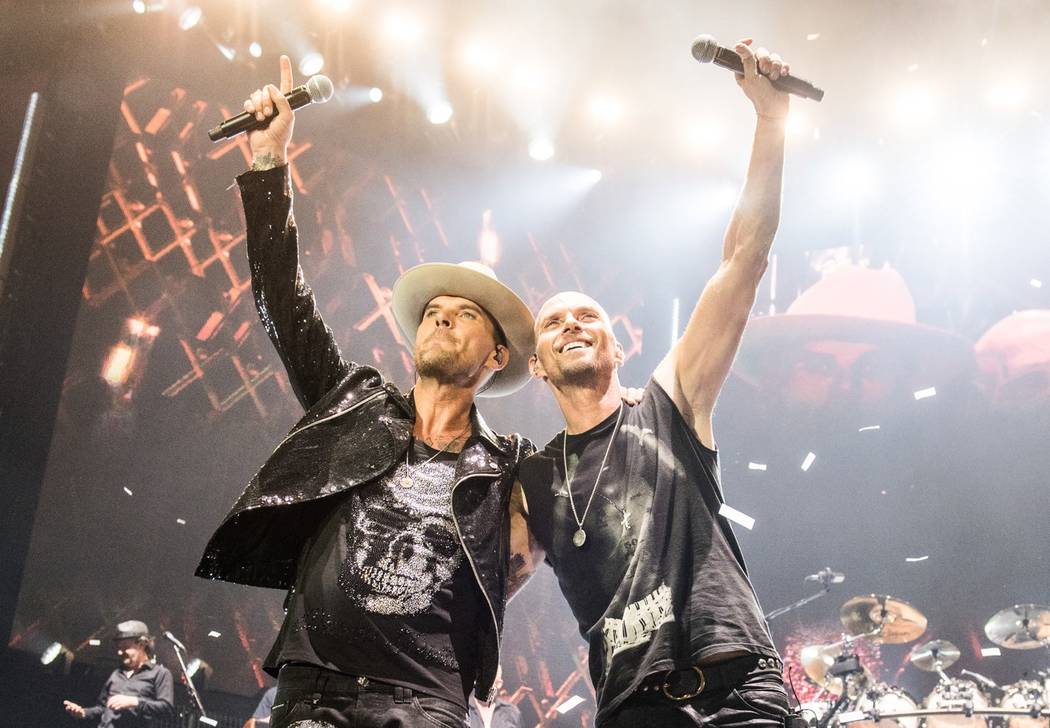
People complaining that Bohemian Rhapsody is a sanitised, plodding account of stadium-level superstardom needn’t wait for an alternative trip to the cinema that has all of the guts and tension of the real thing: After The Screaming Stops is a no-holds-barred documentary following the fortune of late-80s chart toppers Bros. They may not seem the most obvious subject – the relatively brief period during which their star was in the ascendant has perhaps dimmed our collective memory of how brightly it shone. But directors Joe Pearlman and David Soutar have made a searingly brilliant film, a portrait of Matt and Luke Goss that manages to glance into the abyss of the music industry without losing its intimacy.

after-the-screaming-stops-keep-clear-02

Key to its success is the decision not to focus on the past, but the present. The brothers have independently led successful careers since making a financially ruinous fresh start in the early 90s – Matt has a residency at Las Vegas and Luke is a film actor and director in Los Angeles. The significance of their decision to leave the UK becomes more apparent throughout the film, which follows their journey back to their town of birth and a reunion to perform together for the first time in 28 years at the O2.

Also key to the film’s success is that it lets its subjects do the talking. Matt, a dapper figure with a penchant for bandanas and licking things, behaves in a way that leans towards self-parody, though we glimpse a far more fragile interior. Luke is the quieter of the two, thoughtful and deadpan, but again concealing a darker, brittler side to his personality. They make for an immensely entertaining double act, both intentionally and unintentionally funny, though to the film’s credit they are never treated as subjects for mockery. I predict that audiences will find them endearing company whether or not they had any previous interest in the brothers Goss. Mind you, the rapturous audiences at the 2018 BFI London Film Festival and the female hordes glimpsed in the film suggest that a fair number of people out there do have an interest – perhaps once a Brosette, you’re always a Brosette.

I wasn’t. (Were boys even allowed to be Brosettes?) I was a bit on the young side, and my loyalties were firmly committed to the church of Jason Donovan. But Bros represented something a little more grown-up than the manufactured pop of Stock, Aitken and Waterman; I was musically aware enough to recognise the virtuosity of Matt Goss’ vocals and to be impressed that they co-wrote their songs, and the subject matter seemed very adult (they sang about ‘issues’ – drugs! racism! materialism!), a stark contrast to the bouncy love songs of the Hit Factory.

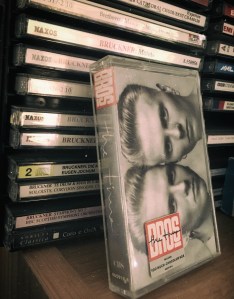
The two worlds collided in a blissful Christmas 1989 when Jason Donovan and Matt Goss dueted for a second and a half in Band Aid II (more thrilling to my ears than a hundred Bonos), and by lucky chance the shift in my musical tastes had come after my brother and I had made Christmas lists, so he ended up with a Kylie album that no longer looked so appealing next to my copy of The Time. In arty black and white printed onto slightly silver card, Matt and Luke shirtless and staring moodily from the cover, it was by any measure the sexiest cassette on my shelf. (Come to think of it, it probably still is.)

IMG_3353

I only recently discovered that the album was perceived as something of a failure at the time, hitting only number 4 in the charts and going merely gold after the four times platinum achieved by its predecessor. Apparently the critics were a bit sniffy about it too, which surprises me even now, because objectively it’s a more interesting, ambitious piece of work, from the structural and harmonic complexity of ‘Madly in Love’ to the edgier guitar-driven funk grooves on side B and the poignant balladry of ‘Sister’. The first single ‘Too Much’ is arguably the best pop single they made.

But ‘Chocolate Box’ (‘their best song so far’, said my friend Stephen, the biggest Bros fan in my class) only reached number 9 in the charts, and After the Screaming Stops touches on the field day the media had over that. ‘A few years earlier I’d have given anything to get to number 9,’ Matt Goss says, still baffled by the relentlessly negative treatment they received. And although the point is not hammered home, one of the things you come away with is a sense of just deep the wounds inflicted by the media can be.

Screen Shot 2018-11-09 at 15.11.04

The UK press hated Bros. Even at my tender age I was aware of some of the attempts to whip up scandal, the ‘Craig is gay’ rumours, and the tediously frequent ‘Bros split!’ headlines, as if newspapers thought that by printing it they could make it true. In a way, they succeeded. In an early 90s interview, Terry Wogan mentions that the press have been ‘trying to kill you stone dead for about a year and a half now,’ before gently adding ‘I don’t think they mean any harm to you, it makes headlines’. You can see in the brothers’ faces that they’re not convinced. And why would they be? The onslaught must have felt pretty personal to such young men and the relentless schedule and media circus had already taken its toll – although the film doesn’t touch on it, the band’s third member Craig Logan ended up in a wheelchair with Chronic Fatigue Syndrome, and in one heartbreaking sequence we see them wheeled onto television, broken smiles fixed on their faces, within a day of hearing that their sister had been killed in a car accident. Ultimately the pressure and the critical mauling would drive apart not only a band, but a family.

Screen Shot 2018-11-09 at 15.09.47

Why did the press hate them so much? It’s not clear. Perhaps as Wogan says, ‘it seems to be a very British thing that as soon as somebody really succeeds everybody attempts to kick the ground from under them and destroy them’. Or maybe the press felt like the neighbour looking out of the window at the endless rows of young girls hanging around outside the Goss’ London house desperate to catch a glimpse of their idols (‘They’re just sitting there like dummies!’) – and don’t the media hate feeling left out? Just out of curiosity, I glanced through a review of the sold out O2 reunion, and there it is again: the snark. The mockingly parroted tagline ‘the biggest reunion in pop history’. The sarcastic acknowledgement that Luke can ‘hit the right parts of his drum kit in the right order’. Perhaps some critics are simply intimidated by genuine charisma – because whatever you make of Matt and Luke Goss, there is plenty of that, onstage and off. Either way, when they talk about the press as if still processing a trauma, you begin to get a sense of what was casually inflicted all those years ago.

It becomes abundantly clear in After The Screaming Stops that these are just some of the wounds that have never had a chance to heal, and we are treated to some spectacular scenes of sparks flying in rehearsals. Some reviews have made shorthand references to Spinal Tap or the Gallagher brothers, but both comparisons do the film a disservice; having so carefully invited us into the respective worlds of Matt and Luke, the undeniably entertaining arguments turn on a knife edge; there is a point in the film when it becomes unclear whether you’re watching a bittersweet comedy or a slow motion car crash. It is a moving, even haunting journey, and by the time it finishes, it may surprise you just how much you’re invested in an 80s pop sensation making a successful comeback.

fantastic-fest-review-after-the-screaming-stop-is-a-hilarious-and-heartfelt-look-at-80s-pop-stars-bros-2

After The Screaming Stops is in cinemas from today and on DVD and digital release on 12th November. You can check out the screenings here and you absolutely ought to get to one if you possibly can. You’ll thank me, I promise.